
As an Amazon Associate, we earn from qualifying purchases. This post may contain affiliate links.
By Luis Gustavo. See how we research and review our content.
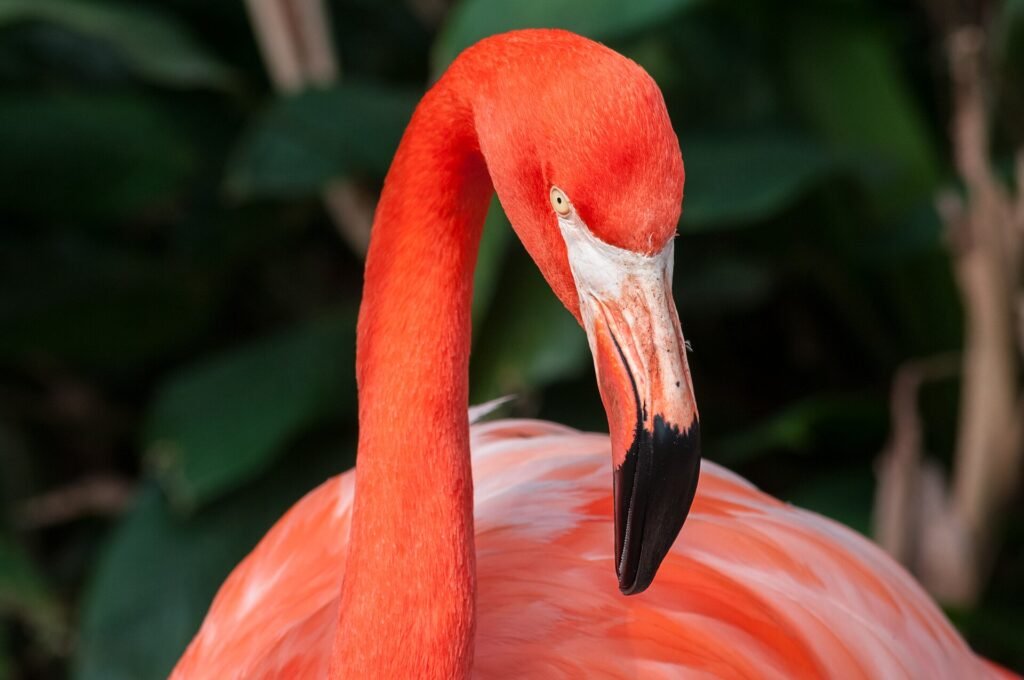
Few birds are as instantly recognizable as the flamingo, with its long curved neck, thin legs, and that vivid pink plumage that has become a symbol of beaches and pool floats everywhere. But a lot of what most people assume about flamingos doesn’t quite match what happens in the wild: the color isn’t something they’re born with, the one-legged stance hides a real energy-saving trick, and the beak works in a way unlike almost any other common bird. These 6 facts about flamingos show why this bird is stranger, and far more interesting, than its decorative image suggests.
1. Flamingos aren’t born pink
Flamingo chicks hatch with gray or white feathers, and the famous pink coloring only shows up gradually over the first couple of years of life. The pigment comes from diet: flamingos feed on algae, small crustaceans, and other aquatic microorganisms rich in carotenoids, the same compounds that give carrots and shrimp their color. The flamingo’s body processes those pigments and deposits them in its feathers, skin, and even its beak — which is why captive flamingos fed a diet low in carotenoids can turn noticeably paler, almost white, until zoos adjust their feed with specific supplements to preserve the species’ natural color.
2. Standing on one leg is an energy-saving trick
The classic image of a flamingo standing on one leg isn’t just a striking pose — it’s a real thermoregulation strategy. By tucking one leg under the body and hiding it among the feathers, flamingos reduce the amount of skin exposed to cold water or wind, cutting down on body heat loss. Research shows flamingos can hold this balance with almost no active muscle effort, thanks to a joint configuration in the leg that locks the posture passively — which is why they can stay like that for long stretches, including while asleep, without burning extra energy just to avoid falling over.
3. The flamingo’s beak works upside down
Unlike most birds, flamingos feed with their heads turned completely upside down, dipping the beak into water or mud in an inverted position. The beak’s curved shape only works correctly that way: internal filter-like structures called lamellae strain the water and trap small crustaceans, algae, and larvae, while a thick, muscular tongue pumps water back out several times a second, somewhat like a whale’s filter-feeding baleen. This filtering system is efficient enough that a flamingo can feed almost continuously, without needing to stop and manually separate food from water and mud.
4. Colonies can number in the hundreds of thousands
Flamingos are intensely social birds and are rarely seen alone — they form colonies ranging from a few dozen birds to, in extreme cases like Tanzania’s Lake Natron, more than a million individuals gathered in one place. Living in such a large group offers collective protection against predators (it’s much harder for a bird of prey to single out one target in a dense crowd) and helps synchronize the whole colony’s breeding cycle, which improves the odds of survival for chicks hatched around the same time, when food resources are still abundant for everyone.
5. They perform a synchronized group courtship dance
Before the breeding season, entire flamingo colonies take part in group courtship rituals, with hundreds of birds moving their heads and necks in unison, stretching their wings, and marching back and forth in tight clusters. This collective display helps sync up the hormonal cycle across the whole colony, so that most females become ready to mate at roughly the same time — which again favors chicks hatching simultaneously, reinforcing the same safety-in-numbers strategy already built into how the colonies form.
One egg on a mud mound, fed with flamingo milk
Once a pair has formed, both partners build the nest: a raised mound of mud, often one to two feet (30 to 60 cm) tall, with a hollowed top. The raised mound keeps the egg off the wet ground. Each pair typically lays a single large, chalky white egg, and it hatches after about 27 to 31 days of incubation.
The newborn chick’s first meal is not filtered from the lake at all. Both males and females produce crop milk, a nutritious fluid made in the upper digestive tract, and the chick stays on the mound for roughly 5 to 12 days while it is fed this way. After that, young birds that can walk and swim join a crèche, a group of chicks watched over by adults while the parents keep feeding their own.
6. There are six flamingo species in the world
The name “flamingo” actually covers six distinct species, spread across the Americas, Africa, Europe, and Asia, with noticeable differences in size and shade of pink between them. The Caribbean flamingo tends to have the most vivid, almost red coloring, thanks to a diet especially rich in crustaceans, while the Andean flamingo lives in salt lakes at extreme altitudes, above 10,000 feet (3,000 m), in the South American Andes — one of the most hostile environments ever occupied by any water bird. One more little-known fact about flamingo anatomy: what looks like the bird’s backward-bending “knee” is actually its ankle — the real knee sits hidden close to the body, tucked under the feathers, in a configuration shared with other long-legged birds. Readers who enjoy this kind of wildlife trivia might also like our articles on facts about penguins and facts about dolphins, two other animals known for their unique social behavior.
Recommended products
Compact Bird Watching Binoculars — useful for anyone who wants to get a closer look at flamingos and other birds at parks, reserves, and wildlife-watching trips.
Realistic Flamingo Plush Toy — a fun, true-to-life way to bring this bird’s unmistakable look home, for kids or collectors alike.
Disclosure: this is our tracked affiliate link.
Which of these flamingo facts surprised you the most? Share this article with anyone else who loves wildlife.