
As an Amazon Associate, we earn from qualifying purchases. This post may contain affiliate links.
By Luis Gustavo. See how we research and review our content.
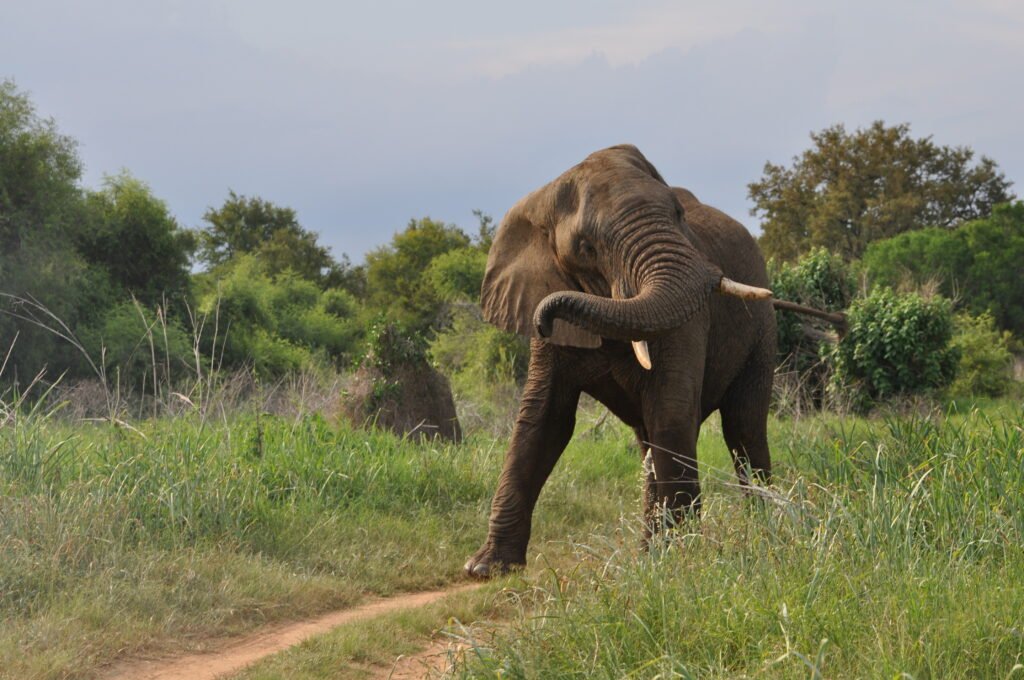
Few animals impress at first sight quite like a full-grown elephant — and few hide, behind that sheer size, such a sophisticated repertoire of memory, communication, and social life. The largest living land animal isn’t just big: it’s also one of the most closely studied mammals when it comes to social behavior, able to recognize dozens of individuals, recall routes used decades earlier, and communicate through sounds the human ear can’t even pick up. These 6 facts about elephants show why this giant impresses just as much as it moves anyone who studies its behavior up close.
1. The memory that guides the entire herd
The matriarch, the oldest female in the group, carries decades of knowledge about where to find water and food during drought, and field research shows that herds led by older matriarchs survive severe droughts better, precisely because she remembers water sources used years earlier, including some visited only once, back in her own childhood. That ability is linked to the hippocampus, the brain region tied to spatial memory, which is proportionally well developed in elephants — who have one of the largest brains among land mammals, both in absolute size and in cortical neuron count. Elephants also recognize dozens of other individuals by voice and scent, and field studies have shown they can distinguish human voices tied to groups historically associated with hunting from voices belonging to groups without that history, reacting with more caution to the former.
2. A trunk with roughly 40,000 muscles and not a single bone
An elephant’s trunk has no bone at all — it’s made entirely of muscle, estimated at around 40,000 distinct muscle units, which gives it a rare combination of raw strength and precision. With it, an elephant can rip a thick branch off a tree or push a heavy log, but it can also pick up a single grain or peel a shell without crushing what’s inside. At the tip sit finger-like projections — one in Asian elephants, two in African elephants — that work almost like a pincer, used to manipulate small objects with a delicacy that contrasts sharply with the animal’s size. The trunk also works as an extremely sensitive nose, a snorkel usable even underwater, and a “hand” for drinking, sucking up several liters of water before pouring it into the mouth.
3. Elephants talk across miles, in a sound humans can’t hear
Much of elephant communication happens in infrasonic frequencies, below 20 Hz and therefore inaudible to the human ear, yet able to travel several miles through both air and the ground itself. These low rumbles are picked up not just by the ears but also by the feet and trunk, which are sensitive to vibrations carried through the ground — a perception system that helps the group notice, for instance, an alarm signal sent out by another herd far away. Researchers have documented elephants stopping what they were doing and changing direction in response to an infrasonic signal detected miles away, with no visual or audible cue a human standing nearby could have picked up on. This long-range channel helps coordinate the movement of entire families across open landscapes, where sight alone would reach nowhere near as far.
4. Grief, empathy, and a social structure led by females
Herds are organized around female bonds: daughters, granddaughters, and sisters stay together for life under the matriarch’s leadership, while males leave the natal group once they reach sexual maturity, typically between ages 12 and 15, going on to live alone or in loose bachelor groups. This arrangement is one of the most studied examples of grief-like behavior in the animal kingdom: elephants repeatedly return to the spot where a herd member died, gently touch the bones and tusks with their trunks in an investigative way, and have been observed standing around a body for extended periods — behavior consistently documented by field researchers for decades. Females also help care for other females’ calves within the group, a behavior that raises the survival odds of the youngest members.
5. The largest living land animal — with a heart to match
The African bush elephant is the largest land animal alive today: adult males can top 6 tons and stand over 3 meters tall at the shoulder, supported by nearly straight, pillar-like legs, an adaptation needed to bear that much weight without the joint wear a bent leg would suffer. An adult elephant’s heart weighs between 12 and 21 kilograms and beats more slowly than that of smaller animals, a pattern common in large mammals, where heart rate tends to run inversely proportional to body size. Their skin can be up to 2.5 centimeters thick in some spots, yet stays sensitive enough to feel an insect bite, which explains why elephants bathe in mud and dust so often — the coating protects the skin against parasites and sunburn, acting almost like a natural sunscreen.
6. Giant ears that work like a built-in radiator
African elephant ears, much larger than those of their Asian relatives, are packed with blood vessels close to the skin’s surface, and simply flapping them helps dissipate heat from the blood before it circulates back through the body, working almost like a built-in cooling system. That mechanism matters even more because elephants can’t sweat the way humans do, so they rely far more on this ear-driven heat exchange, along with mud and water, to stay cool under the savanna’s harsh sun. The ears also serve a visual-communication role: spread wide and angled forward, they signal alertness or threat; relaxed and pressed against the body, they indicate a calm animal. That’s why ear shape and size are often the fastest way to tell an African elephant from an Asian one at a distance.
Readers who enjoy learning about the social lives of other giants will also like our facts about whales, another enormous animal with sophisticated social behavior and communication, and our facts about bears, which show how sharp senses also shape survival for large mammals.
Recommended products
Realistic Elephant Plush Toy — a warm pick for anyone charmed by how affectionate and intelligent these animals really are.
Decorative Elephant Family Resin Figurine Set — a nod to elephant family structure for anyone’s home shelf or desk.
Disclosure: this is our tracked affiliate link.
Which of these elephant facts surprised you the most? Share this article with anyone else who finds these giants fascinating.