
As an Amazon Associate, we earn from qualifying purchases. This post may contain affiliate links.
By Luis Gustavo. See how we research and review our content.
Few animals carry a reputation as distorted as the shark’s. Decades of horror movies built the image of a relentless predator lurking just offshore — but the real biology behind these animals is far stranger, far older, and in many ways far less frightening than Hollywood suggests. These facts about sharks tell the other side of that story.
1. Sharks are older than trees
The shark lineage first appeared around 400 million years ago, well before dinosaurs and before the first trees showed up on the planet roughly 350 million years ago. That means shark ancestors were already swimming Earth’s oceans at a time when land didn’t have forests as we know them today. They’ve survived at least five mass extinction events, including the one that wiped out the dinosaurs, which makes the basic shark body plan one of the most successful evolutionary designs in the history of life on Earth.
2. Some sharks live longer than 400 years
The Greenland shark holds the longevity record among all known vertebrates: a 2016 study published in the journal Science, using carbon dating on the shark’s eye lens, estimated the age of one female between 272 and 512 years, with a best estimate around 390 years old. That means sharks alive today could have been born before the French Revolution. The species’ extremely slow growth rate — roughly half an inch per year — and a metabolism adapted to icy Arctic waters explain much of that unusual lifespan.
3. Sharks have a sixth sense that detects electricity
Beyond sharp vision, an acute sense of smell, and hearing, sharks have a sensory organ most animals lack entirely: the ampullae of Lorenzini, a network of pores around the snout filled with a conductive gel capable of detecting extremely weak electrical fields, including the ones generated by a prey animal’s muscles hiding under the sand. This sensitivity is precise enough that some sharks can locate prey that’s completely buried and motionless just from the electrical activity of its heartbeat, without relying on sight or smell at all.
4. Most shark species are harmless to humans
Of more than 500 cataloged shark species, only about a dozen are involved in recorded incidents with humans, and many of those — like the whale shark, the largest fish on the planet — feed exclusively on plankton and small fish, filtering water instead of hunting. According to the Florida Museum’s International Shark Attack File, the global average sits around 60 to 80 unprovoked attacks per year worldwide, a tiny number compared to plenty of everyday risks: statistically, a person is more likely to be seriously injured by a falling coconut than by a shark attack.
5. Some sharks have to keep swimming just to breathe
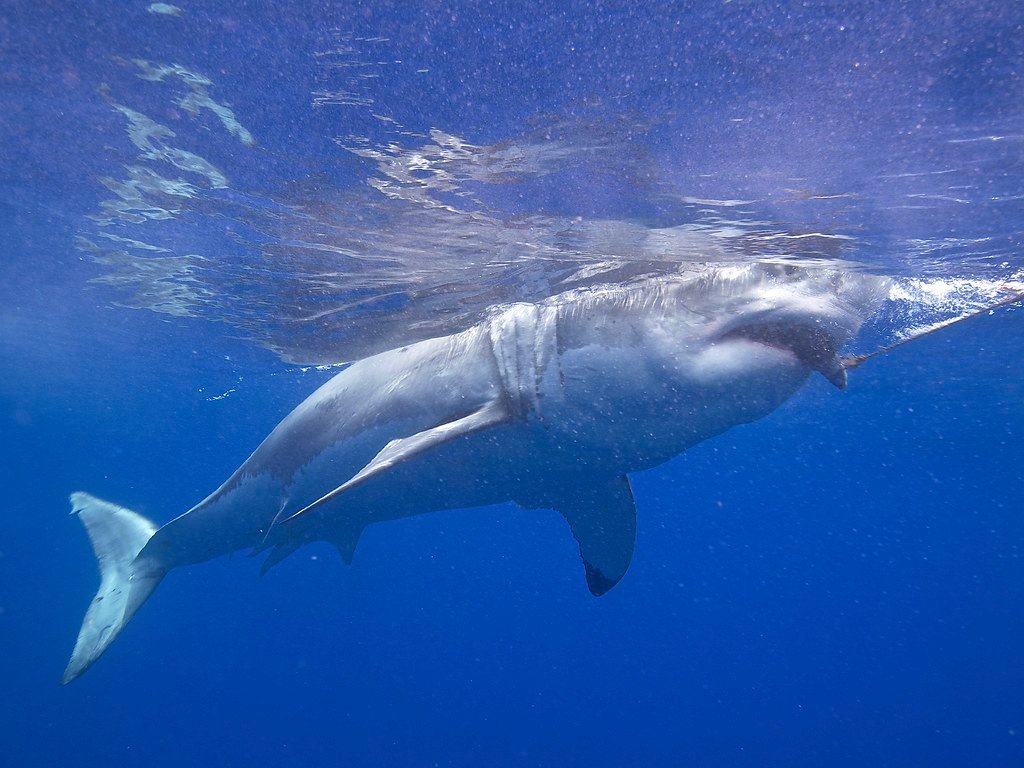
Species like the great white and the mako shark rely on a mechanism called ram ventilation: water only flows over their gills while the animal is moving, forcing it into the mouth fast enough to extract oxygen. If these sharks stopped swimming entirely for too long, they could suffocate. Other species, like the nurse shark, use a different mechanism that actively pumps water over the gills, letting them rest motionless on the ocean floor for hours — a physiological difference that shows just how much “shark” covers more than one single body plan or behavior.
Why sharks matter for keeping the oceans in balance
As apex (or near-apex) predators, sharks regulate the populations of species below them on the food chain, which indirectly protects entire ecosystems like coral reefs and kelp forests. Marine ecology studies show that removing sharks from a reef tends to trigger a cascade effect: the species they normally keep in check multiply unchecked, throwing off the whole local balance — including herbivorous species that, in excess, can devastate coral areas. Despite that role, an estimated tens of millions of sharks are killed every year, largely for the shark fin trade, which has pushed several species onto endangered species lists in recent decades.
Shark tourism has also turned into a real economic argument for protecting the animals rather than fearing them. Researchers studying dive destinations in places like the Bahamas and Fiji have found that a single reef shark can generate far more money alive, through repeat diving tourism over its lifetime, than it would from a one-time sale to the fin trade — a financial case that’s helped push several countries toward shark sanctuary laws in their waters over the past two decades.
If you’re into curiosities about life underwater, our piece on facts about the oceans is another dive into how little we still know about the water covering most of the planet.
To keep exploring this subject, take a look at facts about earthquakes.
Want a fun reminder of these ancient predators at home?
Giant Realistic Shark Plush Toy — a classic gift and decor piece for anyone who loves marine life, in a large, detailed size.
Shark Encyclopedia Book for Kids — packed with real shark facts and photos, great for curious young readers (or adults).
Disclosure: these are our tracked Amazon affiliate links.
Which of these shark facts surprised you most? Share it with someone who also finds these animals fascinating — and badly misunderstood.