
As an Amazon Associate, we earn from qualifying purchases. This post may contain affiliate links.
By Luis Gustavo. See how we research and review our content.
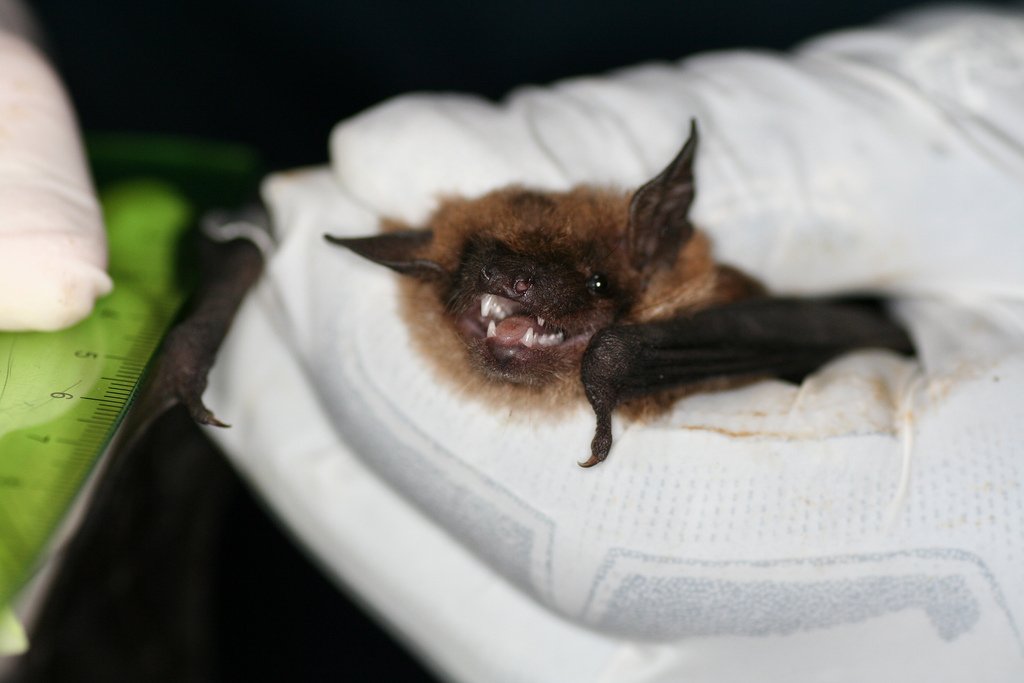
Few animal groups carry a reputation as far removed from reality as bats. Cast as horror-movie props and bad omens, they’re actually one of the most successful and ecologically important groups of mammals on the planet, with adaptations that still intrigue biologists studying them today. Here are 6 facts about bats grounded in real research, without the spooky exaggeration.
1. Bats are the only mammals capable of true, sustained flight
Flying squirrels and other so-called “flying mammals” don’t actually fly — they glide, using a stretched flap of skin to coast between trees without flapping. Bats are different: their extremely elongated arm and finger bones support a thin skin membrane, the patagium, that functions as a real wing, allowing powered, sustained, and highly maneuverable flight just like a bird’s. That trait defines the order Chiroptera — a name that literally means “hand-wing” in Greek — and sets bats apart from every other living mammal.
2. Echolocation works like a biological sonar with astonishing precision
Most bat species emit ultrasonic pulses, typically somewhere between 20 kHz and 200 kHz — well above the roughly 20 kHz ceiling of human hearing — then interpret the returning echo to build a real-time three-dimensional map of their surroundings. The system is precise enough for a bat to judge the size, texture, and even species of a flying insect in total darkness, adjusting its flight path in a fraction of a second to intercept it. Engineers have studied this mechanism for decades as inspiration for sonar and artificial navigation sensors.
3. There are more than 1,400 species, roughly a fifth of all mammals
After rodents, bats form the second-largest group of mammals on Earth, with over 1,400 cataloged species — about 20% of all known mammal diversity. The size range is extreme: the bumblebee bat (*Craseonycteris thonglongyai*), native to Thailand, weighs around 2 grams and is considered one of the smallest mammals alive, while flying foxes of the genus *Pteropus*, found across Southeast Asia and Oceania, can have a wingspan exceeding 1.5 meters.
4. A single bat can eat thousands of insects in one night
Insect-eating species can consume between 600 and over 1,000 insects per hour of active hunting, which over a single night can add up to thousands of mosquitoes, moths, and crop pests. Research on the economic value of this service estimates that bats save billions of dollars a year in US agriculture by reducing the need for pesticides against farm pests. Other species are essential pollinators — the agave plant used to produce tequila, for instance, relies heavily on pollination by nectar-feeding bats active at night.
5. Only three species are true vampire bats, and none of them “suck” blood the way movies show
Contrary to the myth, vampire bats don’t suck blood: they make a small, precise cut with sharp teeth and lap up the blood that flows out, aided by an anticoagulant protein in their saliva called draculin that keeps the wound from clotting long enough for them to feed. There are only three true vampire bat species in the world, all native to the Americas, and the most common, *Desmodus rotundus*, mostly feeds on livestock rather than humans. Interestingly, these bats also share blood with each other through regurgitation when a colony member fails to find a meal — a well-documented act of social cooperation among researchers who study bat behavior.
6. Some bats live 30 to 40 years, an outlier for their body size
For a small mammal, the lifespan of certain bat species is remarkable: individuals from genus *Myotis* have been recorded living more than 30 years in the wild, a longevity wildly disproportionate to their tiny body size. By comparison, other mammals of similar weight, like mice, typically live only 1 to 3 years. That mismatch between size and lifespan has made bats a growing focus for scientists studying the biological mechanisms of aging, including DNA repair efficiency and unusual resistance to certain diseases.
Why the “blind vampire” image refuses to die
No bat species is actually blind — most see quite well, and some fruit-eating species that don’t rely on echolocation at all depend almost entirely on eyesight to find food at night. The phrase “blind as a bat” likely stuck because, in the dark, a bat in flight appears to be guided by nothing we can perceive, when in fact sound is doing all the work. The vampire association, meanwhile, took off largely after Bram Stoker’s 1897 novel *Dracula* popularized the count’s transformation into a bat, long before science had properly described the three actual vampire bat species — all discovered in the Americas and entirely unknown to the European folklore that originally inspired the legend.
Anyone who enjoys animals that rule the night will also like our facts about owls, another nocturnal hunter full of surprising adaptations.
To keep exploring this subject, take a look at facts about jellyfish.
Want to help bats in your yard — and get free pest control?
Bat House for Garden — gives insect-eating bats a safe place to roost during the day, drawing in natural mosquito control for your backyard at night.
Handheld Bat Detector — converts a bat’s ultrasonic echolocation calls into sounds you can actually hear, letting you track their activity around your home in real time.
Disclosure: this is our tracked affiliate link.
Enjoyed these facts about bats? Share this with anyone who still thinks they’re just a Halloween prop.