
As an Amazon Associate, we earn from qualifying purchases. This post may contain affiliate links.
By Luis Gustavo. See how we research and review our content.
Say “bear” and most people picture one generic animal — big, furry, vaguely threatening. In reality there are eight bear species spread across the planet, from tropical forests to permanent ice, and their biology is far more extreme than it looks at a glance: some go months without eating, drinking, or relieving themselves, while others carry one of the most sensitive noses in the entire animal kingdom. These 6 facts pull together well-established biology that shows why bears are among the most adaptable mammals on Earth.
1. Some bears go months without eating, drinking, or urinating
During hibernation, brown bears and American black bears enter a state of torpor that can last 5 to 7 months depending on the region’s climate. Body temperature drops only a few degrees during this period (unlike hibernating rodents, whose temperature can fall close to freezing), but metabolism slows dramatically, heart rate can drop from around 50 beats per minute to under 10, and the animal neither eats, drinks, nor produces waste — urea is recycled internally and reused to build protein, a mechanism researchers still study for potential applications in human medicine. Pregnant females even give birth during this torpor period, without fully waking up.
2. A bear’s sense of smell is far sharper than a dog’s
Experts estimate a brown bear’s sense of smell is somewhere between 7 and 100 times more sensitive than a dog’s, depending on the comparison method used — and dogs are already the gold standard for trained scent detection. Polar bears can detect a seal hidden under nearly a meter of snow and ice from miles away, hunting almost entirely by smell rather than sight. This sensitivity is also why campsites in bear country need airtight food storage: a food smell can draw a bear from a long distance, even when the food is sealed inside a backpack.
3. There are eight bear species, with wildly different habits
The bear family (Ursidae) includes the brown bear, polar bear, American black bear, Asian black bear, sun bear (the smallest of all, native to Southeast Asia), sloth bear (found in India), spectacled bear (the only South American bear, found in the Andes), and the giant panda. The differences are dramatic: polar bears are almost entirely carnivorous, specialized in hunting seals; giant pandas eat bamboo for more than 99% of their diet; and sun bears, despite their small size, have the longest tongue of any bear, adapted for pulling honey and insects out of tree trunks.
4. Cubs are born tiny and essentially helpless
A brown bear cub is born weighing between 300 and 700 grams — a tiny fraction of its mother’s weight, which can top 200 kg (440 lbs). Cubs are born blind, thinly furred in their most sensitive areas, and completely dependent, usually while the mother is still hibernating, nursing on milk that can be extremely fat-rich (over 30% fat content in some species), which fuels rapid growth in the first weeks out of the den. Depending on the species, cubs stay with their mother for anywhere between a year and a half and 3 years, learning to hunt, forage, and avoid adult males, who can pose a danger to cubs that are not their own.
5. Bears “talk” by clawing and rubbing against trees
Trees marked with deep claw gouges and clumps of fur stuck to the bark aren’t random vandalism — they’re a communication system. Bears rub against specific trunks, leaving body scent and skin oil behind, and claw the bark at heights that signal their own size to other bears passing through — a way of saying “I was here” without direct contact, which helps reduce violent encounters between individuals that generally avoid one another. Researchers who study these “bear trees” can even estimate which individuals frequent a given territory just by analyzing the fur left behind on the bark.
6. The brown bear’s omnivorous diet is one of nature’s most flexible
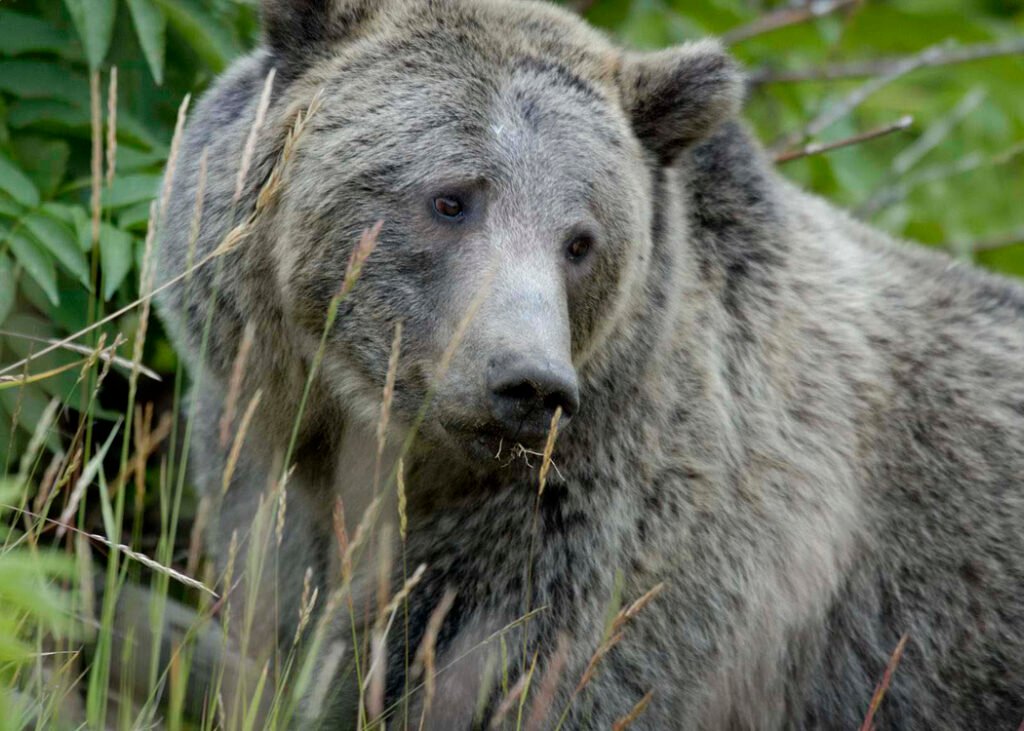
Despite belonging to the order Carnivora, the brown bear (which includes the North American grizzly) eats a mostly plant-based diet for much of the year — roots, fruit, shoots, and insects make up most of its calories in spring and summer. The most famous seasonal exception is the salmon run: at waterfalls in Alaska and the northwestern United States, bears gather to catch fish leaping upstream, packing on essential fat before hibernation. This ability to switch between such different diets depending on season and food availability is a big part of why the brown bear has one of the widest geographic ranges of any large land carnivore.
What these six traits have in common
Hibernation with internal waste recycling, a sense of smell sharp enough to locate prey under snow, eight species with opposite diets, cubs born the size of a hamster, communication through tree-marking, and a diet that shifts with the seasons: all of it points to “bear” being a deceptively broad category. Each species solved the same underlying problem — surviving in extreme environments — with distinctly different biological solutions, which is exactly why this group draws so much attention from biologists studying animal adaptation.
Anyone who enjoys wildlife trivia will also like our facts about owls, and readers who want to keep exploring nocturnal animals should check out our facts about bats as well.
Recommended Products
Realistic Bear Plush Toy — a fun pick for anyone who got hooked on just how different bear species really are.
Wildlife Bear Photography Book — a closer look at bears in their natural habitat, from polar ice to bamboo forests.
Disclosure: this is our tracked affiliate link.
Which of these bear facts caught you off guard? Share this with someone else who can’t resist a good wildlife rabbit hole.