
As an Amazon Associate, we earn from qualifying purchases. This post may contain affiliate links.
If a science fiction writer invented an animal with three hearts, blue blood, and the ability to change color and texture in a fraction of a second, they’d probably get accused of overdoing it. Except that animal already exists, lives in oceans across the entire planet, and is far more common than most people realize: the octopus. These facts about octopuses show why marine biologists consider it one of the strangest and most fascinating animals on Earth.
1. Octopuses have three hearts and blue blood
While most animals get by with a single heart, an octopus has three: two pump blood specifically through the gills to oxygenate it, and the third pumps that freshly oxygenated blood to the rest of the body. The blood itself isn’t red — it’s blue, because it relies on a copper-based protein called hemocyanin to carry oxygen, instead of the iron-based hemoglobin that colors human blood. This adaptation works better in cold, low-oxygen water, which helps explain why octopuses thrive in deep, chilly parts of the ocean where other animals would struggle.
2. They change color and texture in a split second
Octopus skin contains thousands of cells called chromatophores, each individually controlled by the nervous system and able to expand or contract to reveal different pigments almost instantly. Combined with other layers of cells that reflect light and control skin texture — papillae, which can raise bumps to mimic coral or rock — this machinery lets an octopus camouflage itself so precisely it becomes nearly invisible against the seafloor. What’s stranger still is that studies suggest octopuses see very few colors, possibly none at all, raising the hypothesis that they “sense” color in their surroundings through light-sensitive receptors spread across the skin itself, not just through their eyes.
3. Two-thirds of an octopus’s neurons live in its arms, not its head
An adult octopus has around 500 million neurons — in the same ballpark as a small dog — but the distribution is radically different from ours: roughly two-thirds of those neurons are spread across its eight arms rather than concentrated in a central brain. In practice, that means each arm has something like its own mini-brain, able to process sensory information and react to stimuli almost independently, even when a severed arm is no longer attached to the body. This distributed nervous system is one reason researchers treat the octopus as one of the rare examples of complex intelligence that evolved completely separately from the vertebrate lineage.
4. Octopuses use tools and solve puzzles
Documented sightings show veined octopuses (Amphioctopus marginatus) carrying coconut shell halves across the seafloor to later assemble them into a portable shelter — one of the few known cases of tool use outside vertebrates. In captivity, octopuses have been filmed unscrewing jar lids to reach food hidden inside, telling different human faces apart, and even dismantling parts of their own tank overnight. Aquariums have reported octopuses that learned to associate specific caretakers with unpleasant experiences, like uncomfortable tests, and started squirting water at those individuals specifically while ignoring other staff — behavior that suggests individualized memory, something rare outside mammals and birds.
5. Most octopuses live less than two years
Despite all that intelligence, an octopus’s life is surprisingly short: most species live between one and two years, with a few deep-water species stretching a bit longer, though that’s the exception. Females go through a particularly dramatic reproductive cycle: after mating, they lay tens of thousands of eggs and spend weeks or months guarding and aerating the nest without eating, dying shortly after the eggs hatch — a biological process called semelparity. Males typically die within weeks of mating as well. This combination of high intelligence with such a short lifespan puzzles scientists, since intelligent animals like dolphins, elephants, and primates usually live for decades, not months. Research dating back to a landmark 1977 study identified the optic gland — a structure near an octopus’s eyes — as the trigger behind this self-destructive process: removing it experimentally caused mother octopuses to abandon their eggs, start eating again, and live substantially longer. Decades later, a 2022 study analyzing the gland’s secretions found it releases a cascade of steroid-like compounds chemically similar to cholesterol-derived hormones in vertebrates, suggesting this “programmed death” pathway may be far older, evolutionarily, than anyone expected.
Why octopuses have no skeleton — and what that allows
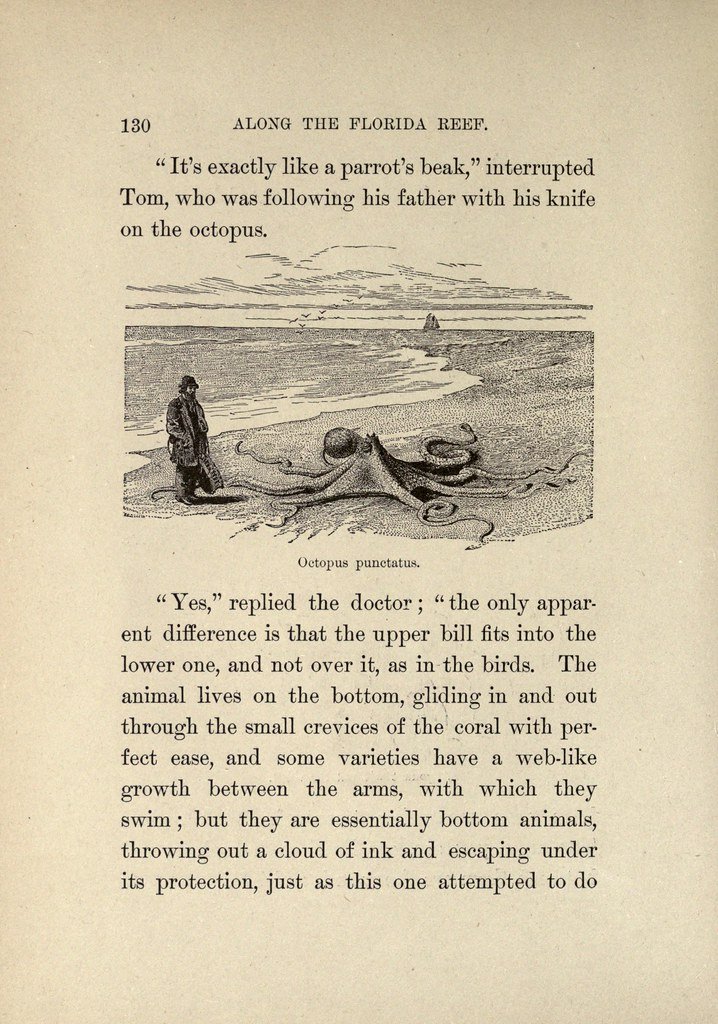
With no bones anywhere in its body, the only rigid structure an octopus has is its parrot-like beak, used for piercing and eating prey. That lack of a skeleton means an octopus can squeeze through any opening wider than its beak — videos of octopuses escaping aquarium tanks through gaps just a few centimeters wide have gone viral worldwide and illustrate the point well. That same flexibility also helps with hunting: octopuses can wedge themselves into rock and coral crevices to ambush prey or hide from larger predators like dolphins and sharks, making the lack of a skeleton more of an evolutionary advantage than a limitation.
If you’re into curiosities about ocean life, our piece on facts about sharks covers another ocean predator full of biological surprises.
Want a fun reminder of this ocean genius at home?
Reversible Octopus Plush (Happy/Sad Mood) — flips inside out to change its expression, a fun (plush) analogy for the camouflage skills that make octopuses masters of disguise.
Octopus Marine Biology Book for Curious Readers — packed with real research on octopus intelligence and behavior, great for curious readers of any age.
Disclosure: these are our tracked Amazon affiliate links.
Which of these octopus facts surprised you most? Share it with someone who also thinks this animal is a genius in disguise.