
As an Amazon Associate, we earn from qualifying purchases. This post may contain affiliate links.
By Luis Gustavo. See how we research and review our content.
Few animals carry as much undeserved baggage as spiders. The instinctive reaction of fear or disgust hides one of the most sophisticated groups of predators on the planet — with hunting techniques, engineering, and behavior that outclass most other invertebrates in complexity. They’re worth a second look.
1. Not every spider hunts with a web
Of the more than 50,000 known spider species, a significant share don’t rely on a web as their main trap. Crab spiders, for instance, camouflage themselves on flowers — some species can even shift color over a few days to better match the flower they’re sitting on — and simply wait for prey to wander close enough, without spending energy building anything. Wolf spiders hunt actively on the ground instead, chasing prey down like a typical land predator, relying on sharp vision and speed rather than a fixed trap. There are even fishing spiders, which literally walk on water and catch small fish and tadpoles, showing that spiders occupy far more varied hunting niches than the popular image of “a web in the corner” suggests.
2. Spider silk is stronger than many metals, gram for gram
Gram for gram, the silk of some spider species has tensile strength comparable to steel, but with an elasticity steel doesn’t have — it can stretch considerably before breaking. Scientists have studied spider silk for decades trying to replicate that combination of strength and flexibility in synthetic materials, without full success so far. A single spider can produce up to seven different types of silk, each with a specific function: structural thread, sticky thread for capture, thread for wrapping prey, and even thread used only for the egg sac. Engineers and materials scientists have tried for years to mass-produce synthetic spider silk using genetically modified bacteria, yeast, and even goats engineered to produce silk proteins in their milk — progress has been made, but matching the exact combination of strength and stretch that spiders produce naturally, at scale, remains an unsolved engineering challenge.
3. Some spiders can “fly” long distances
A phenomenon called ballooning lets young spiders (and some small adults) release one or more silk threads into the air and get carried by the wind, sometimes tens or even hundreds of kilometers. Recent research suggests they don’t rely on wind alone — the static electric charge present in the atmosphere also helps lift the thread, similar to how an electrostatic balloon behaves. This is the main reason spiders show up on isolated islands in the middle of the ocean, far from any original population: they literally flew there. Spiders have even been recorded landing on ships hundreds of kilometers from any land, which gives a sense of how far this mechanism can carry them.
4. Most spiders are harmless to humans
Despite widespread fear, the overwhelming majority of spider species pose no real risk to people — their fangs are usually too small or weak to pierce human skin, and their venom, when present, evolved to immobilize insects, not large mammals. Of the thousands of cataloged species, only a small number have venom that’s clinically relevant to humans, and most spider bites treated in hospitals don’t even require specific treatment. Many “spider bites” reported by patients turn out, on closer medical review, to be something else entirely — skin infections, other insect bites, or reactions with no clear cause — because spiders rarely bite defensively unless directly trapped against skin, and most species would rather flee than engage.
5. Spiders are a natural form of pest control
A single spider can consume hundreds of insects per year, including mosquitoes, flies, and other household pests. Ecologists consider spiders one of the most important natural regulators of insect populations — estimates from ecological studies suggest the total biomass of insects consumed by spiders worldwide, per year, is on the order of hundreds of millions of tons. In farms and gardens, the presence of spiders often reduces the need for pesticides, since they do this work for free, continuously, without needing reapplication or leaving chemical residue in the soil.
What science is still discovering about spiders
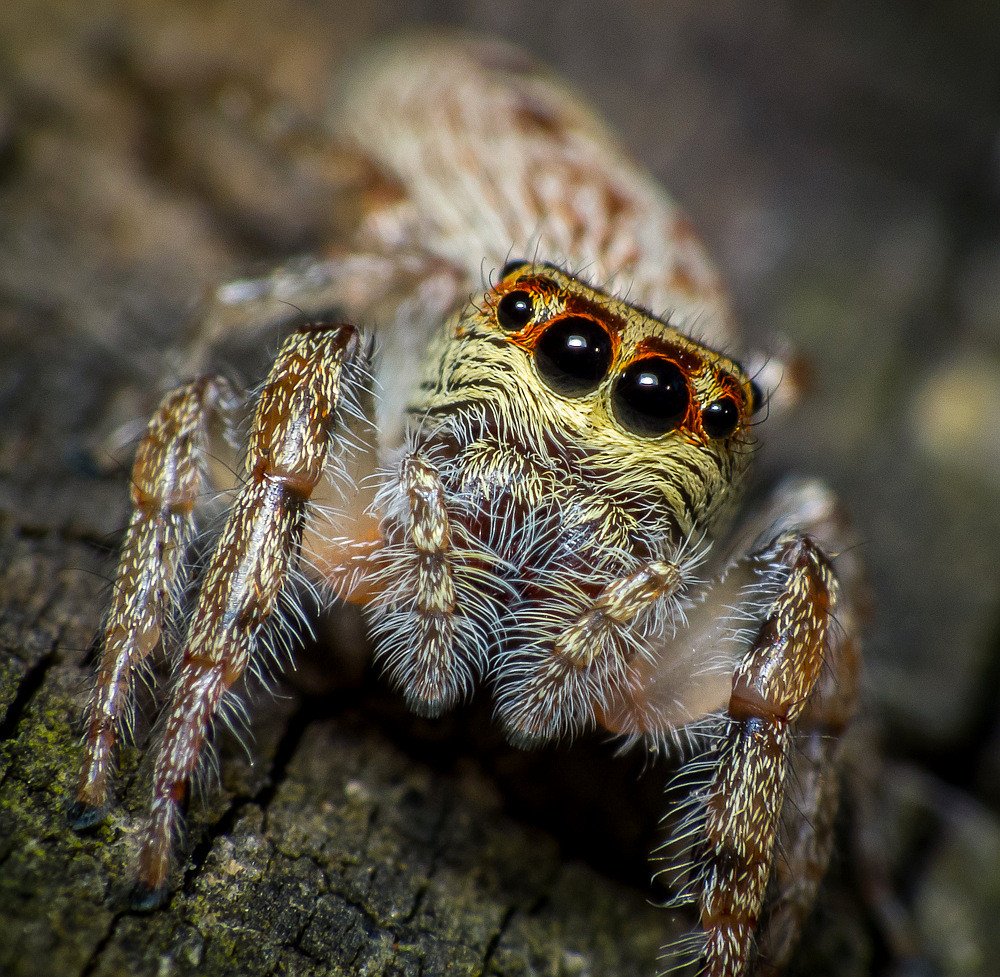
Despite being studied for centuries, spiders keep surprising researchers. Recent discoveries include species that practice active parental care (some females feed their young a kind of nutrient-rich “milk” produced in their own body) and social behaviors in species that live in cooperative colonies, sharing web-building and hunting duties — a rare behavior among spiders, which are normally solitary and territorial. These findings have been reshaping how scientists classify intelligence and social behavior in invertebrates more broadly. Jumping spiders in particular have drawn attention for problem-solving behavior once thought exclusive to vertebrates, including planning detours to reach prey they can’t see directly — a level of forward-thinking that surprised researchers studying a brain smaller than a grain of rice.
Recommended products
Spider and Arachnid Field Guide — for anyone who wants to understand the species and behavior behind these facts.
Pocket Magnifying Glass for Insect Observation — useful for safely observing spiders and other small creatures up close.
Disclosure: these are our tracked Amazon affiliate links.
Other reads that fit this theme: facts about sharks and facts about earthquakes.
Enjoyed these spider facts? Next time you spot one in the corner of a room, it might be worth a closer look instead of a swat.