
As an Amazon Associate, we earn from qualifying purchases. This post may contain affiliate links.
By Luis Gustavo. See how we research and review our content.
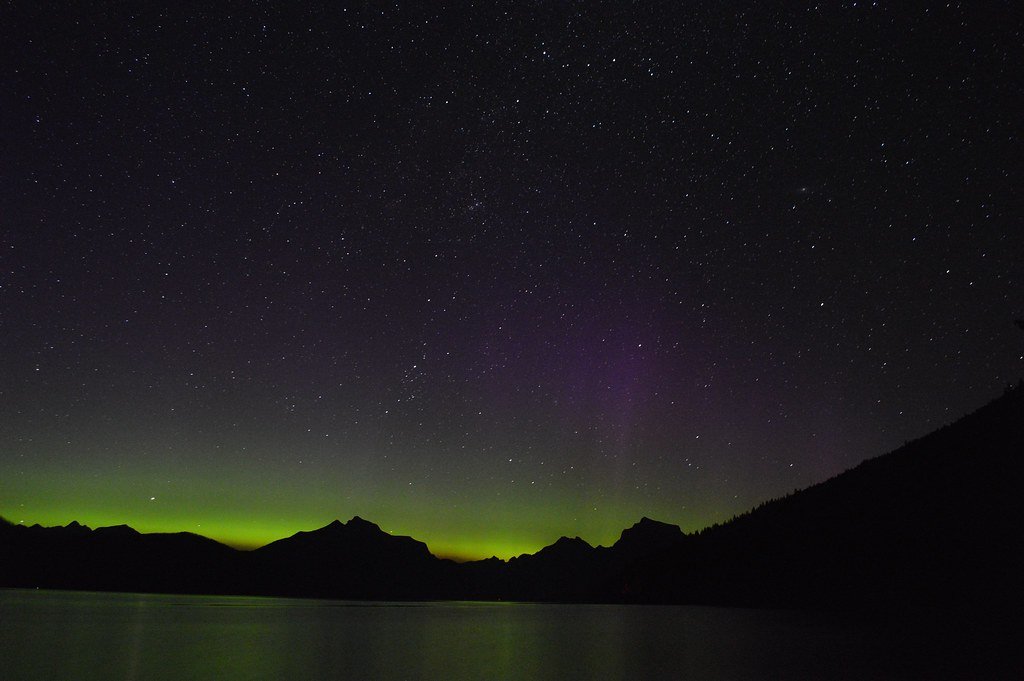
Few natural spectacles can stop an entire town in its tracks like the northern lights. Curtains of green, pink, and violet dancing across the night sky look like something out of another world — and in a sense, they are: the source sits 93 million miles away, on the Sun. These facts about the northern lights explain what’s actually happening up there when the sky starts to glow.
1. The aurora is caused by particles from the Sun hitting the atmosphere
The Sun constantly releases a stream of charged particles called the solar wind. When that wind reaches Earth, most of it gets deflected by the planet’s magnetic field, but some particles slip through near the poles, where the magnetic field is weaker. There, electrons and protons collide with oxygen and nitrogen atoms in the upper atmosphere, at altitudes between roughly 60 and 190 miles, transferring energy that those atoms release back out as light — the same basic physics used inside a neon sign, just on a planetary scale.
2. The colors depend on which gas gets hit — and at what altitude
Green, the most common aurora color, comes from oxygen being excited between about 60 and 190 miles up. Higher than that, thinner oxygen produces the deep red seen in the strongest auroras, while nitrogen, hit at lower altitudes, is responsible for the blue and purple tones along the bottom edge of the light curtain. Exactly which mix of colors a person sees on a given night depends on the intensity of the solar storm, the altitude of the collision, and even how sensitive the human eye is to faint light — cameras often pick up far more vivid colors than the naked eye perceives in the moment.
3. The name “aurora borealis” comes from Roman mythology
The term was coined by astronomer Galileo Galilei in 1619, combining “Aurora,” the Roman goddess of dawn, with “Boreas,” the Greek god of the north wind. He mistakenly believed the phenomenon was caused by sunlight reflecting off the atmosphere before daybreak. The real scientific explanation wouldn’t arrive until centuries later, through the work of Norwegian physicist Kristian Birkeland in the early 20th century, who was the first to correctly connect the phenomenon to solar particles and Earth’s magnetic field.
4. There’s a mirror version at the south pole: the aurora australis
Everything happening at the north pole has an almost identical twin at the south pole, called the aurora australis. Both occur at the same time, driven by the same solar storm, and tend to be symmetrical in shape and intensity since they depend on the same interaction between the solar wind and Earth’s magnetic field. The difference is geography: while the aurora borealis is relatively easy to see from countries like Norway, Iceland, and Canada, the aurora australis sits mostly over Antarctica and the surrounding ocean, making it far harder to observe simply because so little inhabited land sits at that latitude.
5. Strong solar storms have knocked out entire power grids
When the Sun releases a particularly intense coronal mass ejection, the resulting aurora can be seen at far lower latitudes than usual — and in 1989, a geomagnetic storm strong enough to do exactly that also triggered a nine-hour blackout across the entire province of Quebec, Canada, by inducing unwanted electrical currents in the power grid. Events like that are exactly why space agencies keep a close eye on solar activity: a beautiful aurora in the sky is also a visible sign that high-energy charged particles are slamming into the planet.
Where and when your odds of seeing it are best
The northern lights concentrate in a band called the auroral oval, generally between 65° and 72° north latitude, which is why destinations like Tromsø (Norway), Reykjavik (Iceland), Fairbanks (Alaska), and northern Canada have become dedicated aurora-viewing hubs. The best window usually runs from September to March, when nights are longer and darker — during the northern hemisphere’s summer, the sun barely sets at those latitudes, making the aurora invisible even when it’s active. Clear skies, low light pollution, and a more active phase of the solar cycle (the Sun follows an activity cycle roughly 11 years long) all significantly boost the odds of a memorable light show.
If you’re into phenomena that light up the night sky, our piece on facts about the moon is another good read for stargazers.
If this topic interests you, it’s worth checking out our piece on black hole facts.
Want to bring a bit of that glow home?
Aurora Borealis LED Night Light Projector — projects a swirling cloud and colored-light effect on your wall, great for anyone who loves the look of the aurora even far from the polar circle.
Northern Lights Photography Book — a coffee-table collection for planning a trip or just soaking in the colors from your couch.
Disclosure: these are our tracked Amazon affiliate links.
Have you ever seen the northern lights in person, or is it still on your bucket list? Share these facts with someone else who’s fascinated by the night sky.