
As an Amazon Associate, we earn from qualifying purchases. This post may contain affiliate links.
By Luis Gustavo. See how we research and review our content.
For more than 25 years, there has always been at least one person off the surface of Earth. Ever since its first modules launched in 1998, the International Space Station has maintained continuous human presence in orbit — one of the longest-running scientific collaborations in history. But that streak has an expiration date: space agencies have now confirmed that after 2030, the ISS will be taken out of service and brought back down to Earth in a controlled reentry. Before that happens, it’s worth understanding what this station actually is, what daily life aboard it really looks like, and what comes next.
How the International Space Station became possible
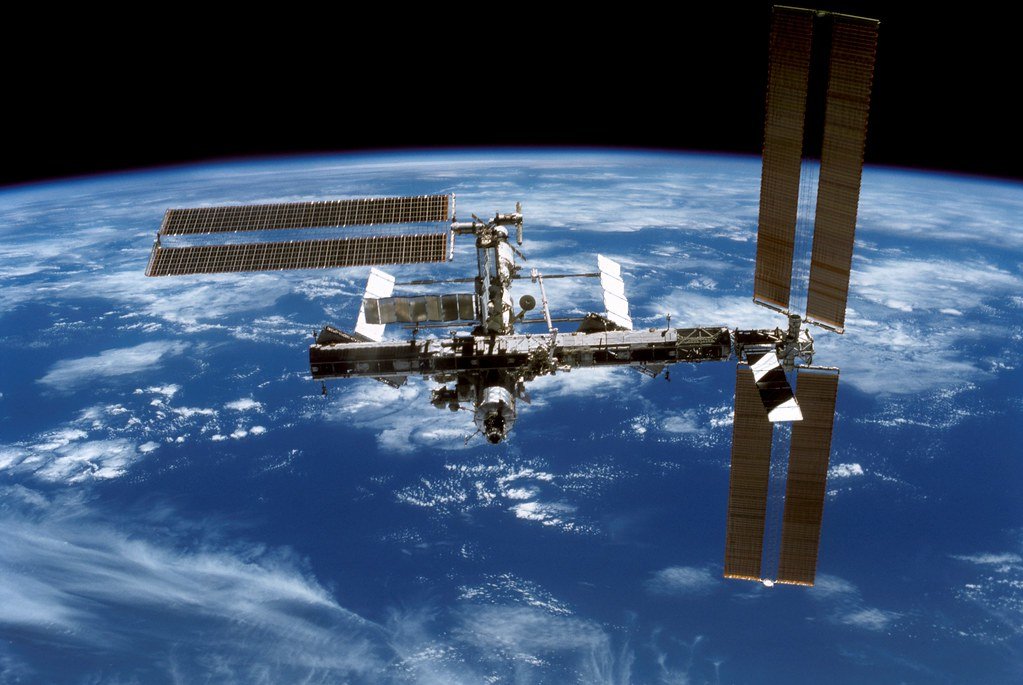
The ISS wasn’t built by a single country — it’s the product of a partnership between five space agencies: NASA (United States), Roscosmos (Russia), ESA (Europe), JAXA (Japan), and CSA (Canada). Each contributed modules, technology, launches, or crew members, and the station functions as a shared orbital laboratory roughly the size of a football field once you count the solar arrays. Physically, it’s a patchwork of pressurized modules connected together, enormous solar panels generating electrical power, and robotic arms used for maintenance and cargo handling. For anyone who wants to visualize that modular structure up close, scale model kits exist that faithfully reproduce how the pieces fit together — a fun, tactile way to understand the engineering before the real thing is gone.
One trip around the planet every 90 minutes
The ISS orbits Earth at roughly 400 km altitude, moving fast enough to complete a full lap around the planet approximately every 90 minutes. In practice, that means the crew sees the sun rise and set about 16 times every single day — a light cycle completely disconnected from the human body clock we’re used to on the ground. It sounds like a fun trivia fact, but it has real consequences: astronauts rely on artificial lighting schedules and strict sleep routines to keep any sense of normal time in the middle of that many “days” packed into one 24-hour period.
What a work day on the ISS actually looks like
Life aboard runs on an almost minute-by-minute schedule. On average, astronauts put in about 6.5 hours of scheduled work each day, six days a week — running experiments, maintaining station systems, communicating with mission control. That’s on top of meals, hygiene, and personal time, all of which are also blocked into the schedule. It isn’t a desk job: every task is planned months in advance by teams on the ground, and any surprise — a minor leak, a malfunctioning instrument — can reshuffle the entire day’s plan. Even so, astronauts often carve out a few free moments to look down at Earth through the Cupola, the station’s dedicated observation module.
The mandatory 2.5 hours of daily exercise
Nothing in the routine is as non-negotiable as physical exercise: roughly 2.5 hours a day, mandatory, on specialized equipment — a treadmill fitted with a harness system that straps the astronaut down (since without gravity you can’t simply “step” onto it), a stationary bike adapted for microgravity, and a resistance machine that simulates weightlifting using vacuum-based pistons. This isn’t optional or flexible time — it’s the primary defense against the bone density loss and muscle atrophy that microgravity inflicts on the human body. Skip that daily effort, and the body deteriorates in orbit far faster than it would under almost any condition on Earth.
Sleeping and eating while floating
At night, each astronaut retreats to a small personal crew cabin — roughly the size of a shower stall — where they sleep zipped inside a sleeping bag strapped to the wall, specifically so they don’t drift around the station while unconscious. There’s no “bed” in the traditional sense: without weight, the body doesn’t need a mattress to support it, but it does need to be anchored so it doesn’t bump into panels or equipment overnight. Meals follow a similarly adapted routine: most food comes rehydratable or thermostabilized, packaged in pouches that get water added or get heated before eating. Fresh food — fruit, vegetables — arrives occasionally aboard resupply spacecraft, but in limited quantities, so it tends to get eaten quickly once it shows up, almost like a small celebration aboard.
Why the science done up there can’t happen anywhere else
More than 4,000 scientific experiments have been carried out aboard the ISS across its history, spanning fields from human biology to materials science. In microgravity, liquids behave in ways that simply don’t occur on Earth — bubbles don’t rise, flames burn in perfect spheres instead of the teardrop shape we’re used to — which makes the ISS a one-of-a-kind laboratory for studying fluid dynamics and combustion. It’s also possible to grow protein crystals and metal alloys with a purity and uniformity that’s impossible under normal gravity, work with direct applications in drug development and new materials. Add to that continuous Earth observation — tracking hurricanes, wildfires, and climate change from orbit — and it becomes clear why so many countries have kept investing in this platform decades after the first modules launched.
The physical toll of living in space
Spending months in microgravity takes a real toll on the human body. Bones can lose density at a rate of up to roughly 1% per month in certain regions — far faster than natural age-related osteoporosis on Earth — while muscles atrophy from the lack of resistance against gravity. Bodily fluids redistribute too: without gravity pulling blood downward, more fluid pools in the upper body, which puffs up the face and can affect vision in some astronauts on long-duration missions. And then there’s radiation: outside the thicker protection of Earth’s atmosphere, crew members absorb a much higher dose of cosmic radiation than anyone on the surface ever would. That’s exactly why the 2.5 hours of daily exercise isn’t a wellness footnote — it’s the primary medical countermeasure against damage that would otherwise be significantly worse.
The confirmed retirement: what happens after 2030
Here’s the part many people don’t know yet: the ISS has a scheduled end date. NASA and its partner agencies have confirmed that after 2030, the station will be decommissioned and brought back to Earth through a controlled reentry. All astronauts will be brought home from the station for the final time, and a purpose-built spacecraft — a dedicated deorbit vehicle — will guide the structure so that most of it burns up in the atmosphere, with any remaining debris falling into a remote, uninhabited stretch of ocean, far from shipping lanes or population centers. That controlled process matters enormously: without it, a structure the size of the ISS reentering uncontrolled would pose a genuine risk, which is exactly why this entire plan exists — to avoid that scenario altogether.
Why the ISS is coming to an end
The main driver isn’t waning scientific interest — it’s the physical wear on the hardware itself. Some ISS modules are already more than 25 years old, well beyond the service life they were originally designed for, and keeping a structure that age operating safely gets more expensive and technically riskier with every year that passes. In response, the strategic direction of the space agencies has shifted: instead of continuing to fund and operate a station of their own indefinitely, the plan is to move toward commercial space stations, built and run by private companies. NASA would become a customer of those services — buying access to orbital space, much like it already buys launch seats from SpaceX instead of operating its own rockets — rather than owning and operating the hardware itself.
Who’s left in orbit once the ISS is gone
Once the ISS retires, China’s Tiangong space station becomes the only continuously operated government-run space station left in orbit — a notable shift in the geopolitics of human spaceflight. Meanwhile, several American companies are already developing commercial space stations to fill the gap, with NASA planning to act as a kind of anchor customer: guaranteeing early demand for these private stations without owning them outright. It’s essentially a repeat of the model that already worked for crew transport — NASA buying services from private companies instead of building everything in-house — now applied to the orbital infrastructure where humans actually live and work.
The legacy the ISS leaves behind for Mars and beyond
Regardless of exactly when the deorbit happens, the ISS has already proven something no earlier mission ever did: that human beings can live, work, and cooperate internationally in space for decades at a stretch, not just days or weeks. Everything learned about the effects of microgravity on the human body, about supply logistics in closed environments, about recycling water and air in a closed loop — that knowledge is precisely what makes longer crewed missions to the Moon, and eventually Mars, scientifically feasible today. The ISS isn’t just a laboratory winding down; it’s the instruction manual that made dreaming about farther destinations possible in the first place.
How the international partnership actually works day to day
Keeping five agencies from different countries jointly operating a single structure in orbit takes an impressive amount of coordination. Each agency owns specific parts of the station and specific pieces of the operation: Roscosmos has historically handled the propulsion that keeps the ISS’s orbit stable (the station gradually loses altitude from residual atmospheric drag and needs periodic reboosts), while NASA manages much of the electrical power and life support systems. ESA and JAXA each contributed their own laboratory modules — the European Columbus and the Japanese Kibo — each carrying its own line of scientific research. Even during periods of political tension on the ground between some of these countries, cooperation aboard the ISS has kept running, which is often cited on its own as proof that space science can operate above certain geopolitical rivalries. That mutual dependence, incidentally, is one of the reasons replacing the ISS isn’t simply a matter of “building another station” — it means rebuilding an entire network of operational trust between countries.
How astronauts actually get up there (and back)
Nobody takes an elevator to the ISS: the trip starts with a crew spacecraft launched from Earth, today mostly SpaceX’s Crew Dragon capsule or Russia’s Soyuz, depending on the mission. The climb typically takes a few hours before docking with the station, though in some cases the trip is stretched out to allow for trajectory adjustments. Once aboard, each astronaut typically stays for a mission lasting between four and six months — though there are already records of considerably longer stays, used specifically to study the limits of the human body in microgravity. The trip home follows the reverse path: the capsule undocks, reenters the atmosphere protected by a heat shield, and descends by parachute, either landing on solid ground or splashing down in the ocean depending on which vehicle is used.
The risks the crew faces every single day
Living on the ISS isn’t just uncomfortable — it’s genuinely risky. The station is exposed to space debris, small fragments of satellites and orbital junk traveling at extremely high speeds that, even at the size of a grain of sand, can seriously damage the structure on impact. That’s why the ISS occasionally performs evasive maneuvers when ground tracking detects an object on a collision course. Fires and air leaks are also real, heavily rehearsed risks: every crew member goes through repeated emergency simulations before ever launching, so they know exactly which procedure to follow within seconds if an alarm goes off. Add to that the psychological isolation of spending months away from family in a cramped space with only a handful of other people, and it becomes clear why astronaut selection and training is such a rigorous, lengthy process.
Staying in touch with Earth from up there
Despite the distance, astronauts aren’t cut off from everything. The ISS has internet connectivity and allows regular video calls with family, along with access to social media — several crew members have posted photos and videos directly from orbit, showing auroras seen from above or storms forming over the ocean. Even so, latency and limited bandwidth make that communication feel more like an unstable international phone call than a smooth video chat. That regular contact with family and the public back on Earth also plays an important psychological role: it helps ease the isolation of spending months in a closed environment and keeps astronauts connected to the life they’ve temporarily left behind.
Frequently Asked Questions
Will the International Space Station fall to Earth?
Yes, but in a controlled way. After 2030, the ISS will be guided by a dedicated deorbit vehicle to reenter the atmosphere and burn up, with most debris landing in a remote, uninhabited stretch of ocean — this is not an uncontrolled crash.
How many people have been to the ISS?
Nearly 300 people from around the world have visited the station over more than 25 years of continuous occupation, including astronauts and cosmonauts from NASA, Roscosmos, ESA, JAXA, and CSA.
Why do astronauts have to exercise so much in space?
Because microgravity causes accelerated bone density loss and muscle atrophy. The roughly 2.5 hours of mandatory daily exercise on the treadmill, bike, and resistance equipment are the main way to counteract those effects.
When will the ISS retire?
Decommissioning is confirmed for after 2030, when all astronauts will be brought home for good and the station will undergo a controlled reentry.
What will replace the ISS?
Commercial space stations built and operated by private companies, with NASA and other agencies acting as customers. China’s Tiangong station is also expected to become the only continuously occupied government-run station left in orbit.
What is it like to live on the space station day to day?
It runs on a strict routine: roughly 6.5 hours of scientific work, 2.5 hours of mandatory exercise, sleep in individual cabins inside a sleeping bag strapped to the wall, and meals built around rehydratable or thermostabilized food.
A small piece of orbit for your shelf
If reading all this made you want a better feel for just how massive and modular this orbiting structure really is, a model building kit of the International Space Station is a fun, hands-on way to see how the modules, solar arrays, and robotic arms all connect. The International Space Station Model Building Kit is a great way to keep a piece of this chapter of space history on your shelf before the real station is gone for good.
Disclosure: this is our tracked affiliate link.
Enjoyed this deep dive into life aboard the ISS? If you’re into space in general, check out our piece on facts about the Milky Way. Let us know in the comments which fact surprised you the most, and share this with anyone else who’s fascinated by space exploration.
If this topic interests you, it’s worth checking out our piece on artemis mission.