
As an Amazon Associate, we earn from qualifying purchases. This post may contain affiliate links.
By Luis Gustavo. See how we research and review our content.
For more than 50 years, no human being has left low Earth orbit. That changed in April 2026, when the Artemis II mission actually launched, sending a crew around the Moon for the first time since the Apollo era. The Artemis mission — NASA’s program to return astronauts to the Moon — isn’t a distant promise anymore; it’s history unfolding in real time, with concrete milestones, shifting-but-real dates, and an increasingly clear mission architecture. In this deep-dive guide, we’ll walk through what’s already happened, what changes from here, and why the road to the next Moon landing turned out to be longer than originally planned.
Inside NASA’s plan to get back to the Moon
Artemis is NASA’s program to return astronauts to the lunar surface and, from there, establish a sustainable human presence on the Moon. Unlike Apollo, which was primarily a Cold War race to “get there first,” Artemis was built with a broader purpose: testing new technologies, exploring regions never visited before (like the lunar South Pole), and building the infrastructure needed for the next giant leap — eventually, crewed missions to Mars. The program rests on two major NASA-built components — the Space Launch System (SLS) rocket and the Orion crew capsule — combined with commercial partnerships for key pieces, especially the vehicles that will actually land on the lunar surface. It’s a layered architecture, built mission by mission, each one testing a piece of the puzzle before the next attempt goes further.
Artemis I: the uncrewed test that opened the door
The program officially kicked off in 2022 with Artemis I, an uncrewed flight that sent the Orion capsule on a loop around the Moon and back to Earth. With no astronauts aboard, this mission served as the program’s big stress test: validating the SLS rocket’s performance on its first real launch, checking Orion’s heat shield during the fastest and hottest reentry ever attempted by a spacecraft designed for humans, and confirming that navigation and communication systems worked as expected in deep space. The mission lasted about 25 days and was considered a success, clearing the way for the next step: putting people on board.
Artemis II: humans return to deep space (April 2026)
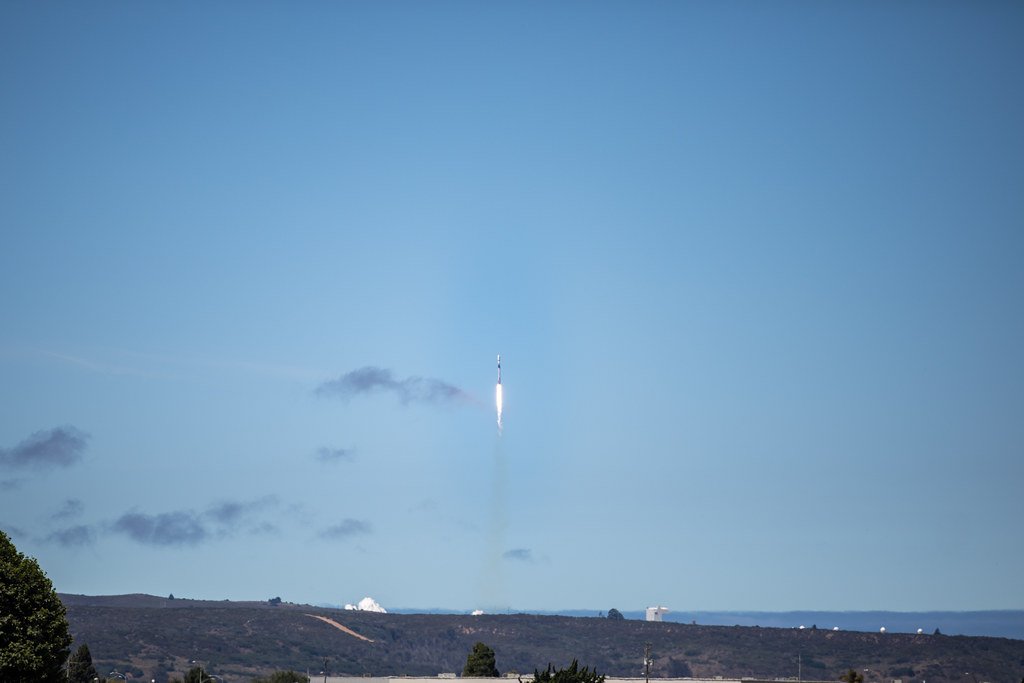
On April 1, 2026, Artemis II lifted off from Kennedy Space Center with a crew aboard — the first human spaceflight beyond low Earth orbit since Apollo 17 in 1972. The mission flew a free-return trajectory around the Moon: the spacecraft swung close to the lunar surface, used the Moon’s gravity to curve back toward Earth, and returned home without landing. The goal wasn’t to touch down — it was to prove, with real astronauts and real risk on board, that Orion’s life-support systems, deep-space navigation, and reentry capability all work end to end with a human crew. It was both a symbolic and technical milestone: for the first time in over five decades, astronauts watched the entire Earth shrink through a spacecraft window on their way to the Moon.
Why Artemis III changed course and won’t land on the Moon
Here’s one of the most important — and least publicized — shifts in the program. Originally, Artemis III was supposed to be the landing mission, repeating (with modern technology) what Apollo 11 did in 1969. But the real-world development timeline for the commercial lunar landers, built by private companies, didn’t keep pace with Orion’s own flight schedule, forcing NASA to reshuffle the sequence. As a result, Artemis III — now targeted for mid-2027 — has been reworked into an Earth-orbit test flight: the mission will validate rendezvous and docking procedures between the Orion capsule and a commercial spacecraft, a necessary technical step before any actual landing attempt. This isn’t a step backward for the program — it’s a course correction that prioritizes testing each component separately before risking a full lunar descent.
Artemis IV: the real Moon landing, targeting 2028
The big one — the mission that will put human footprints back on the lunar surface — is now planned as Artemis IV, currently targeted for early 2028. The plan calls for Orion to reach lunar orbit and dock with a commercial lunar lander (built by SpaceX or Blue Origin), after which two astronauts would transfer into that lander for the descent to the surface. The target zone is the lunar South Pole region, an area no human has ever explored. Worth repeating: given the program’s own track record, this is a target date, not a guarantee — it’s worth tracking NASA’s updates as the mission gets closer.
Why the South Pole is the destination of choice
The choice of the South Pole isn’t cosmetic. The region is home to permanently shadowed craters — spots that have received no direct sunlight for billions of years — which scientists believe hold significant deposits of water ice. That ice is a strategic resource: it can be melted into drinking water, split into hydrogen and oxygen (for breathing air and rocket fuel, via electrolysis), and dramatically reduce how much supply astronauts need to haul from Earth. For any long-duration lunar base concept, finding water already on site is close to a prerequisite — it’s the difference between occasional visits and a genuinely sustained human presence.
The SLS rocket and Orion capsule, explained simply
The Space Launch System (SLS) is currently the most powerful rocket NASA has ever launched — bigger and stronger than anything used during the Apollo program. Its job is straightforward to describe, even if brutally complex to build: generate enough thrust to pull the Orion capsule (and, eventually, even larger payloads) out of Earth’s gravity and send it toward deep space. Orion, meanwhile, is the astronauts’ home for the journey — a capsule designed to keep a crew of up to four alive and safe through the deep-space portions of the mission, with life-support systems, autonomous navigation, and a heat shield built to withstand extreme reentry temperatures. It’s worth noting that SLS is expected to eventually be surpassed in capability by SpaceX’s Starship, still in development and testing — but for now, SLS is the rocket carrying the literal weight of the Artemis program. If you’re following the program closely, keeping a NASA SLS rocket collectible model on your desk is a fun way to visualize the real scale of this machine while tracking each new launch.
Why private companies like SpaceX and Blue Origin fly the lunar landers
One of the biggest differences between the Apollo era and the Artemis era is the role of the private sector. During Apollo, NASA controlled and largely built everything in-house, with contractors working to the agency’s rigid specifications. For Artemis, NASA chose to contract commercial companies — primarily SpaceX and Blue Origin — to develop the vehicles that will actually land on the Moon, following a “service” model: the agency defines requirements and pays for results, while the companies take on much of the design work, development, and engineering risk. The logic is to cut costs and speed up innovation by leveraging these companies’ experience with reusable vehicles — but it’s also, admittedly, one of the causes behind the schedule delays: synchronizing development of several complex vehicles across different suppliers is an enormous logistical challenge.
Gateway and the vision of a permanent lunar presence
Landing on the Moon once isn’t Artemis’s end goal — it’s just one milestone on the way to something bigger: a sustainable human presence in space. Two concepts anchor that long-term vision. The first is Artemis Base Camp, a planned outpost on the lunar surface near the South Pole meant to support progressively longer astronaut stays. The second is Gateway, a small space station to be built in lunar orbit with international partners, functioning as an orbital waypoint for repeated missions to the surface — something like a train station on the way to the Moon. Together, these two projects form the backbone of a strategy aiming to turn the Moon into a testing and logistics stepping stone for eventual crewed missions to Mars.
Why the Artemis timeline keeps slipping
If you’ve followed the program for a few years, you’ve probably noticed the landing dates keep moving — original targets talked about 2024 and 2025, and now we’re discussing 2027 and 2028. That’s not a sign of failure; it’s an honest reflection of how complex this project really is. Developing, testing, and certifying entirely new vehicles for human spaceflight — especially the commercial lunar landers — simply takes longer than any initial schedule tends to predict. Add in year-to-year budget swings approved by the U.S. Congress and shifting political priorities across different administrations, and it’s clear why deadlines slide. NASA itself has publicly stated an ambitious goal of four Artemis missions in this timeframe, reflecting political pressure to accelerate the pace — but given the track record, the sensible approach is to treat these dates as evolving targets, not carved-in-stone certainties.
The astronauts behind these missions
Unlike the Apollo era, when astronaut selection was almost exclusively military and male, NASA’s astronaut corps today reflects far greater diversity — and that’s already visible in Artemis crews. Building a crew takes years of specialized training: Orion reentry simulations, splashdown-survival drills for scenarios where the capsule lands off its planned recovery zone, practice operating systems under simulated failure conditions, and, for the upcoming landing missions, training on terrain that mimics the lunar surface, including tests with next-generation spacesuits built specifically for walking and working on the Moon — a big departure from the rigid suits used during Apollo. Every crew goes through a selection process that weighs not just technical skill but psychological compatibility for long stretches in confined spaces, a factor that becomes even more critical as missions stretch toward full landings.
What the Artemis program actually costs, and why it matters
One of the most debated aspects of Artemis is cost. Unlike a fixed-budget project, the program is funded year by year through the U.S. federal budget, approved by Congress — which means priorities can shift with every budget cycle, depending on who holds power and which other national priorities are competing for funding. Government oversight reports have already flagged that the SLS rocket’s per-launch cost runs significantly higher than originally projected, partly because the rocket is expendable — it isn’t reused, unlike SpaceX’s rockets. That’s one of the central arguments from people pushing for a faster transition to reusable commercial vehicles in the program’s later phases, and it also helps explain why Artemis’s long-term timeline is tied as much to political and budgetary decisions as to engineering challenges.
The role of international partners
Artemis isn’t an exclusively American program. Following the model that already worked well for the International Space Station, NASA has built formal partnerships with other countries’ space agencies to share costs, technology, and responsibilities. The European Space Agency (ESA), for example, supplies Orion’s service module — the part of the spacecraft responsible for propulsion, power, and life support during the trip to the Moon. Japan and Canada have also signed the Artemis Accords, a set of principles governing peaceful, collaborative space exploration, and are expected to contribute components or astronauts to future missions, including the Gateway station itself. This international cooperation reinforces the idea that returning to the Moon isn’t viewed as a solo American race, but as a shared step in human space exploration — even as the United States, through NASA, remains the program’s primary funder and coordinator.
What science the Artemis missions hope to unlock
Beyond the symbolism of boot prints in lunar regolith, Artemis is designed to generate real scientific payoff. Samples collected near the South Pole could help settle long-standing questions about the Moon’s formation and its bombardment history, since permanently shadowed craters act like time capsules, preserving material that hasn’t been touched by sunlight or weathering for billions of years. Studying the water ice trapped there also has value far beyond life support: its isotopic composition can reveal where that water originally came from — comet impacts, solar wind, or the Moon’s own interior — a puzzle planetary scientists have debated for decades. NASA also plans to leave scientific instruments on the surface for long-term monitoring, extending the kind of data-gathering that the original Apollo seismometers pioneered in the 1970s, but with modern sensors capable of tracking moonquakes, radiation, and dust behavior with far greater precision.
Frequently asked questions about the Artemis mission
When will humans return to the Moon?
A landing is currently targeted for the Artemis IV mission, around early 2028 — but that date has already shifted several times throughout the program and could shift again.
Will Artemis III land on the Moon?
No. Artemis III, targeted for mid-2027, has been reworked into an Earth-orbit test flight focused on validating rendezvous and docking between Orion and a commercial spacecraft — a preparatory step, not the landing itself.
What’s the difference between Apollo and Artemis?
Apollo was a Cold War program focused on reaching the Moon quickly, using technology built almost entirely in-house by NASA. Artemis aims for a sustainable, long-term lunar presence, relies on partnerships with private companies for the landing vehicles, and specifically targets the lunar South Pole, a region no human has ever explored.
Why is NASA targeting the Moon’s South Pole?
Because the region has permanently shadowed craters that may hold water ice — a resource essential for supporting a long-duration lunar base by supplying water, oxygen, and even rocket fuel on site.
Did Artemis II already happen?
Yes. Artemis II launched on April 1, 2026, sending a crew on a lunar flyby (no landing) — the first human spaceflight beyond low Earth orbit since 1972.
What is the Gateway?
It’s a small space station planned for lunar orbit, built with international partners, that will serve as logistical support for repeated missions to the lunar surface.
A physical reminder that we’re going back
If this journey back to the Moon has you as excited as it has us, a NASA SLS rocket collectible model is a great way to follow every new launch with a physical reference on your shelf — and it also makes a solid gift for anyone who loves space.
Disclosure: this is our tracked affiliate link.
Want to brush up on our nearest neighbor in space before the next big landing? Check out our roundup of facts about the Moon.
Are you rooting for the next Moon landing? Let us know in the comments what part of the Artemis mission excites you most, and share this guide with anyone else following the new space race.
To keep exploring this subject, take a look at james webb telescope.