
As an Amazon Associate, we earn from qualifying purchases. This post may contain affiliate links.
By Luis Gustavo. See how we research and review our content.
Touching a doorknob and getting a noticeable shock, or pulling off a piece of clothing and hearing that little crackle in the dark, are common enough at certain times of year that almost nobody stops to ask why. The answer comes down to a simple combination between the air in your home and the materials you use every day — and understanding that combination is the first step toward reducing the annoyance.
What actually causes static electricity at home
Every time two different materials rub against each other — a shoe sole against carpet, a synthetic fabric against skin, hair against a wool hat — electrons can transfer from one material to the other, leaving one surface with a slightly positive charge and the other slightly negative. This phenomenon, called the triboelectric effect, happens year-round, but the charge usually dissipates quickly into the air without anyone noticing. The problem shows up when the air is dry: water molecules in humid air help conduct and neutralize that built-up charge, so when relative humidity drops — as it does in winter or in closed rooms with air conditioning or heating running for hours — the charge has nowhere to go and keeps building up on skin, clothing, or hair until it finds a fast path to discharge, like the metal of a doorknob.
The physics behind that doorknob shock
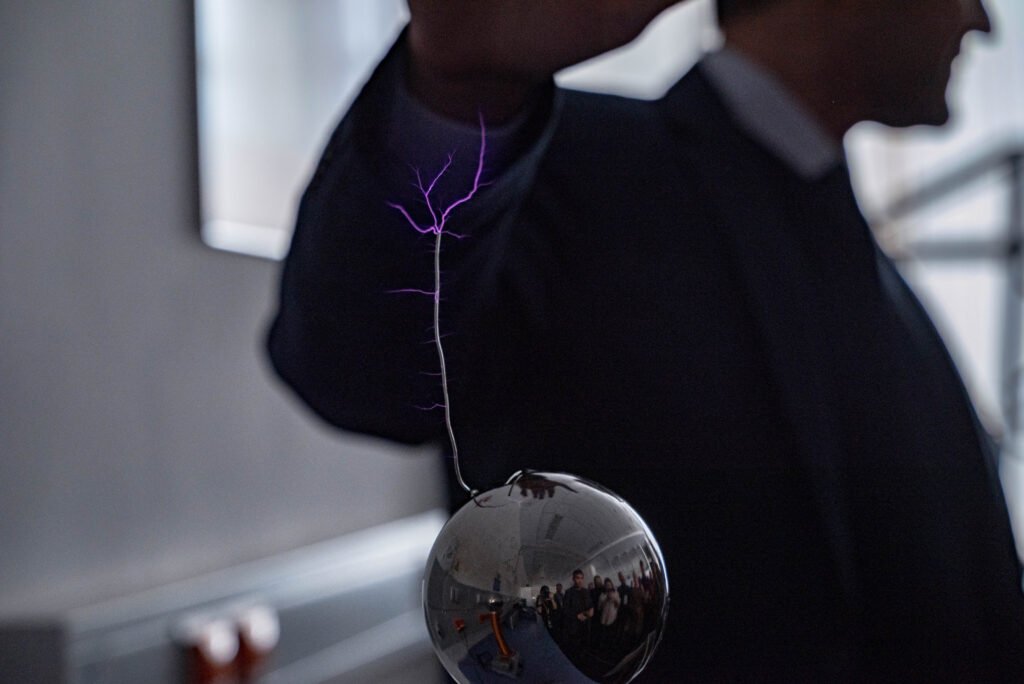
The shock you feel touching a metal object after walking across carpet isn’t the moment the charge builds up — it’s the moment it discharges all at once. Metals are excellent conductors of electricity, so when a charged body gets close to a grounded metal surface, like a doorknob or a car’s body, the accumulated electrons jump across all at once to balance the charge, producing a small visible spark and a shock sensation. Synthetic fabrics like polyester, nylon, and acrylic build up and hold onto far more charge than natural fibers like cotton and wool, which explains why certain clothes and certain rugs seem to generate more static than others, even under similar humidity conditions.
Effects of static electricity in everyday life
- Repeated, unpleasant shocks: from touching doorknobs, light switches, shopping carts, or even another person, especially common on cold, dry days.
- Clothes clinging to your body or to each other: synthetic garments coming out of the dryer or the closet with that “static cling” effect, caused by opposite charges building up between layers of fabric.
- Dust and lint sticking to screens and surfaces: TV, computer, and phone screens attract dust more strongly when they’re electrostatically charged, requiring more frequent cleaning.
- Hair standing on end after removing clothing or a hat: strands of hair repel each other once they pick up the same electrical charge, an effect that’s more visible on dry or fine hair.
In rooms with sensitive electronic equipment, repeated static discharges can, in rare cases, contribute to component failure — which is why IT technicians typically ground themselves before handling the internal parts of a computer. Pet owners often notice the same pattern in animals: a dog or cat’s fur can build up a visible static charge during dry months, sometimes producing a faint crackling sound or a small spark when petted in a dark room, for the exact same triboelectric reason that affects human hair.
Why static feels so much worse in winter
Cold outdoor air holds far less moisture than warm air by nature, and once that cold air gets pulled indoors and heated by a furnace or space heater, its relative humidity drops even further — heating outdoor air without adding moisture back can push indoor relative humidity down into the 10-20% range, well below the 30-50% range most comfort and health guidelines recommend for indoor spaces. That’s precisely why static shocks, clingy sweaters, and staticky hair feel like a winter-specific problem even though the triboelectric effect itself works exactly the same way year-round: summer’s naturally higher outdoor humidity keeps indoor air moist enough that the charge rarely has a chance to build up to a noticeable level in the first place.
How to reduce static electricity at home
Raising the room’s relative humidity is the most direct fix at the root of the problem, since more humid air conducts and dissipates built-up charge before it reaches a noticeable level — a room humidifier running in the most-used rooms during winter usually cuts down dramatically on both shocks and clothing cling. For anyone who wants to tackle it right in the laundry room, anti-static dryer balls or sheets neutralize part of the charge that builds up from friction between garments during drying, keeping clothes from coming out of the cycle already charged. Swapping rugs and bedding for natural fibers where possible, and choosing shoes with leather soles instead of rubber (which insulates better and therefore favors more charge buildup), also help reduce the problem over time.
A simple trick to avoid the doorknob shock
Before touching a metal surface directly after walking across a carpeted room, holding a metal key or coin in your hand and touching its tip to the doorknob first lets the discharge happen through the object instead of your fingertip — the result is the same release of built-up charge, but without the shock sensation on your skin, since the metal’s contact area spreads out the discharge instead of concentrating it on one sensitive spot.
That same humidity imbalance behind static buildup is also responsible for other common household annoyances — see our article on dry indoor air to understand the other effects dry air causes beyond static shocks.
If you’re into this kind of trivia, you’ll probably also enjoy home electricity use.
Recommended products
Ultrasonic Cool Mist Humidifier — tackles the root cause by raising room humidity to dissipate built-up charge before it turns into a shock.
Anti-Static Dryer Balls — reduce charge buildup right in the drying cycle, keeping clothes from clinging or crackling.
Disclosure: these are our tracked Amazon affiliate links.
Do you also get more shocks and clingy clothes on the driest days of the year? Share this article with someone else who deals with it at home.