
As an Amazon Associate, we earn from qualifying purchases. This post may contain affiliate links.
By Luis Gustavo. See how we research and review our content.
The name suggests a single, long, straight road connecting China to Europe. In reality, no such road ever existed: what history books call the Silk Road was a sprawling network of overland trails, mountain passes, and maritime routes, used by different peoples over more than 1,500 years, with no central map or single authority coordinating any of it. These facts about the Silk Road show how this tangle of trade paths shaped the history of entire continents, far beyond the exchange of fabric.
1. The name “Silk Road” has only existed since 1877
The network of routes itself started forming around 130 BCE, when China’s Han dynasty opened regular trade with Central Asia, and stayed active, with plenty of ups and downs, until roughly the 15th century. The term “Silk Road” (from the German *Seidenstraße*), though, is much more recent: it was coined only in 1877 by German geographer and explorer Ferdinand von Richthofen, in a book about the geography of China. No merchant, emperor, or traveler who actually used these routes during the more than a thousand years before that ever called them by this name — to them, it was simply how you got from one place to another.
2. Far more than silk moved along these routes
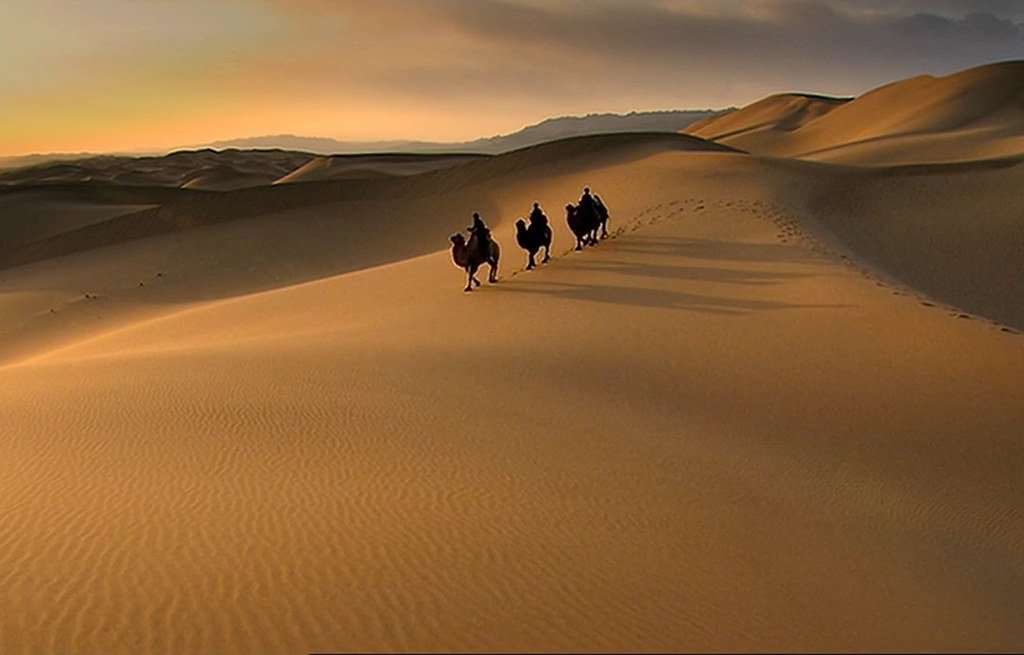
Despite the name, silk was just one item among many that traveled these paths. Spices, paper, gunpowder, glass, precious metals, carpets, horses, and semi-precious stones all moved together in camel and horse caravans. But historians consider the most transformative cargo to have been non-material: alongside the goods traveled numeral systems, manufacturing techniques, the compass, and entire religions — Buddhism spread from India to China largely through these routes, and forms of Nestorian Christianity, and later Islam, reached parts of Central Asia that still follow that faith today.
3. Paper reached the Middle East thanks to prisoners of war
One of the most cited episodes among historians of technology is the Battle of Talas, fought in 751 CE between Arab and Chinese armies near what is now Kazakhstan. Among the Chinese prisoners taken by the victors were craftsmen who knew how to make paper — a technology China had kept largely to itself for centuries. Those prisoners ended up carrying the technique to Samarkand, from where it spread through the Islamic world and, centuries later, reached Europe, gradually replacing animal-skin parchment, which was far more expensive and labor-intensive to produce.
4. The Silk Road likely helped spread the Black Death
Historians and epidemiologists point to Central Asian trade routes as one of the main paths the bacterium *Yersinia pestis* used to reach Europe in the mid-14th century. Infected fleas, carried by rodents hidden among caravan cargo, are believed to have carried the disease from parts of Asia to Black Sea ports, from where merchant ships spread it across the Mediterranean. The resulting pandemic, known as the Black Death, killed between a third and half of Europe’s population within a few years — a grim reminder that trade networks connect not just goods and ideas, but diseases too.
5. Oasis cities like Samarkand lived off caravan traffic
Cities located at strategic points along the route, such as Samarkand (in modern Uzbekistan) and Kashgar (now in China), thrived by charging passage fees and hosting caravanserais — large, fortified inns built specifically to shelter merchants, animals, and cargo overnight. These cities became genuine cultural crossroads, with markets where languages, religions, and customs from vastly different origins coexisted, at a time when most of the world’s population never encountered a foreigner in their entire lives.
6. Marco Polo was neither the first nor the only European on the route
Although Marco Polo’s name is the one most remembered when it comes to Silk Road travel, European merchants, Franciscan monks, and diplomats had already crossed sections of these routes decades before his 13th-century journey. His account, compiled into what’s known as *The Travels of Marco Polo*, became famous because it was one of the first widely circulated, detailed records in Europe describing the Mongol imperial court and the regions along the way — but historians still debate today whether he actually reached China himself or whether parts of the account were pieced together from other travelers’ stories.
Why the Silk Road lost its importance
The decline of the overland route network gained momentum starting in the late 15th century, as European explorers opened direct sea paths to Asia — the most decisive of which was Vasco da Gama’s voyage around the African coast to India in 1498. Shipping large volumes of goods by sea proved cheaper, faster, and safer than risking months of overland travel through deserts, mountains, and territories controlled by different empires, each charging its own fees. As maritime trade came to dominate the exchange between Europe and Asia in the centuries that followed, the old oasis cities lost much of their economic relevance, even though the cultural legacy of that exchange network is still alive today.
Anyone interested in ancient civilizations will also enjoy our facts about Ancient Egypt, another civilization deeply shaped by long-distance trade.
If this topic interests you, it’s worth checking out our piece on facts about medieval knights.
Want to bring a piece of that history into your home?
Printed Silk Scarf for Women — a literal way to own a piece of the commodity that gave this ancient route its name.
Vintage World Map Wall Decor — a great way to visualize the real scale of the distance these caravans covered over centuries.
Disclosure: these are our tracked Amazon affiliate links.
Which of these Silk Road facts surprised you the most? Share this article with anyone else who loves ancient history.