
As an Amazon Associate, we earn from qualifying purchases. This post may contain affiliate links.
By Luis Gustavo. See how we research and review our content.
In under a hundred years, a small Andean kingdom centered on the city of Cusco grew into the largest empire the Americas had ever seen before Europeans arrived, controlling a strip of territory stretching from southern present-day Colombia to central Chile. And they pulled it off without an alphabetic writing system, without wheeled carts, and without draft animals like horses — the Incas solved those problems in ways entirely their own. These 6 facts about the Inca Empire show how one civilization managed to govern millions of people scattered across the Andes using tools most people have never heard of.
1. The empire exploded in size in under a century
What became known as the Inca Empire, or Tawantinsuyu (“the four regions” in Quechua), started out as a relatively small kingdom around Cusco, in present-day Peru. Large-scale expansion really took off around 1438, under the emperor Pachacuti, who reformed the army and administration and launched a wave of conquests that, in under a hundred years, extended Inca territory across parts of what are now Peru, Bolivia, Ecuador, Chile, Argentina, and southern Colombia — the largest territorial reach of any pre-Columbian civilization on record.
2. A road network of over 30,000 kilometers connected the whole empire
To govern such a vast, mountainous territory, the Incas built the Qhapaq Ñan, a road system spanning more than 30,000 km (about 18,600 miles), crossing everything from the desert Pacific coast to altitudes above 5,000 meters (16,400 feet) in the Andes. The network included rope suspension bridges over deep gorges, staircases carved directly into rock, and rest stations spaced every few kilometers. Running along these roads were the chasquis, trained relay messengers who handed off messages or small items at relay stations, carrying word from Cusco to Ecuador — a distance of hundreds of kilometers — in just a matter of days.
3. They had no alphabetic writing, but recorded numbers using knotted cords
Unlike other major ancient civilizations, the Incas never developed an alphabetic writing system. Instead, they used the quipu, a set of colored cords with knots tied in specific positions and patterns, to record numerical data like food stores, tribute payments, and population counts. Quipu specialists, called quipucamayocs, were officials trained specifically to create and interpret these records, which functioned as an extremely sophisticated accounting system for an empire with no paper or ink.
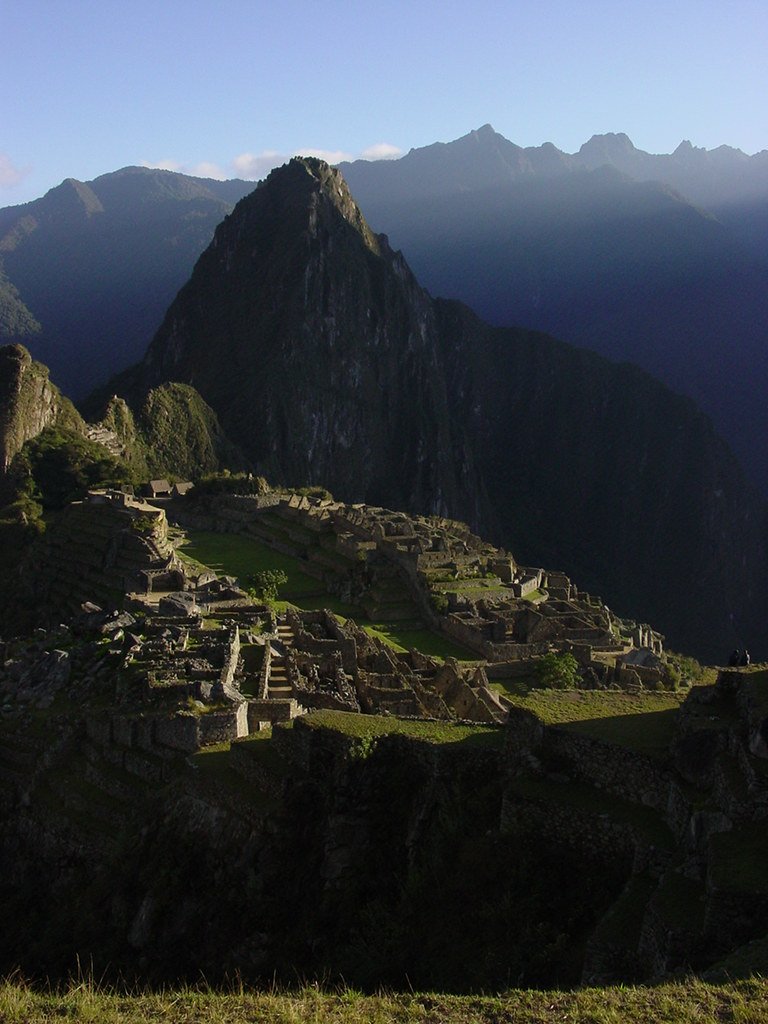
4. Machu Picchu wasn’t a lost city — it was an abandoned royal estate
Built around the mid-15th century, most likely as a retreat and religious center for the emperor Pachacuti himself, Machu Picchu is never mentioned in Spanish conquest-era records, suggesting it had already been abandoned or simply never came to their attention. The most accepted explanation today is that local communities always knew the site was there, but it lost any official use after the empire’s fall. It stayed off the Western world’s radar until 1911, when American researcher Hiram Bingham was guided to the ruins by local residents, popularizing the phrase “lost city of the Incas” — a description that was never quite accurate for the people who lived nearby all along.
5. Its mortar-free stone walls still survive earthquakes today
One of the Incas’ greatest engineering achievements is the polygonal masonry technique used in structures like the Sacsayhuamán fortress near Cusco. Multi-ton stone blocks were cut and fitted together with such precision that, in many sections, you can’t slide even a knife blade between them — with no mortar involved at all. This interlocking technique lets the blocks shift slightly during an earthquake and settle back into place, which is part of why so many of these structures are still standing five hundred years later, while newer Spanish colonial buildings nearby have collapsed or needed reinforcement.
6. A smallpox epidemic weakened the empire before the Spanish even arrived
Before Francisco Pizarro landed on the Peruvian coast with just over 168 men, a smallpox epidemic — a disease brought by Europeans that was already spreading through South America ahead of direct contact — killed the emperor Huayna Cápac and triggered a civil war of succession between his sons, Atahualpa and Huáscar. The empire, already weakened by that internal war and the disease, was divided when Pizarro captured Atahualpa at Cajamarca in 1532 and executed him the following year, even after receiving the agreed ransom in gold and silver. Historians point to this combination of epidemic, civil war, and Spanish military tactics as the decisive factors behind the fall of an empire that, just a few years earlier, had still been expanding rapidly.
A civilization with its own engineering playbook
What stands out about the Inca Empire isn’t just the size of the territory it controlled, but the creativity of the solutions it used to do it without alphabetic writing, wheeled cargo transport, or horses — all replaced by well-planned roads, an efficient messenger system, and a numerical record-keeping method unlike anything else in the world. It’s a good reminder that “advanced” doesn’t have just one recipe, and very different empires can arrive at equally sophisticated answers to the same problems.
Anyone into ancient civilizations will also enjoy our facts about ancient Egypt, another civilization that solved the challenge of governing a vast territory in its own way.
If this topic interests you, it’s worth checking out our piece on knights templar.
Recommended Products
Book About the Inca Empire — a solid way to go deeper into the empire’s real history than a single article can cover.
Machu Picchu Wall Art Poster — a decorative piece for anyone who loves Inca history at home.
Disclosure: this is our tracked affiliate link.
Which of these Inca Empire facts surprised you the most? Share it with someone else who loves history from the Americas.