
As an Amazon Associate, we earn from qualifying purchases. This post may contain affiliate links.
By Luis Gustavo. See how we research and review our content.
In just over eighty years, between the mid-18th and mid-19th centuries, the way humanity produced goods, traveled, and lived in society changed more than in several previous centuries combined. The Industrial Revolution began quietly, in a handful of regions in England, but its consequences — good and bad — still shape economies and cities around the world today. These 6 facts show how that transformation actually played out, well beyond the generic image of “factories and smoke” that usually comes to mind.
1. It all started with coal and an improved steam engine
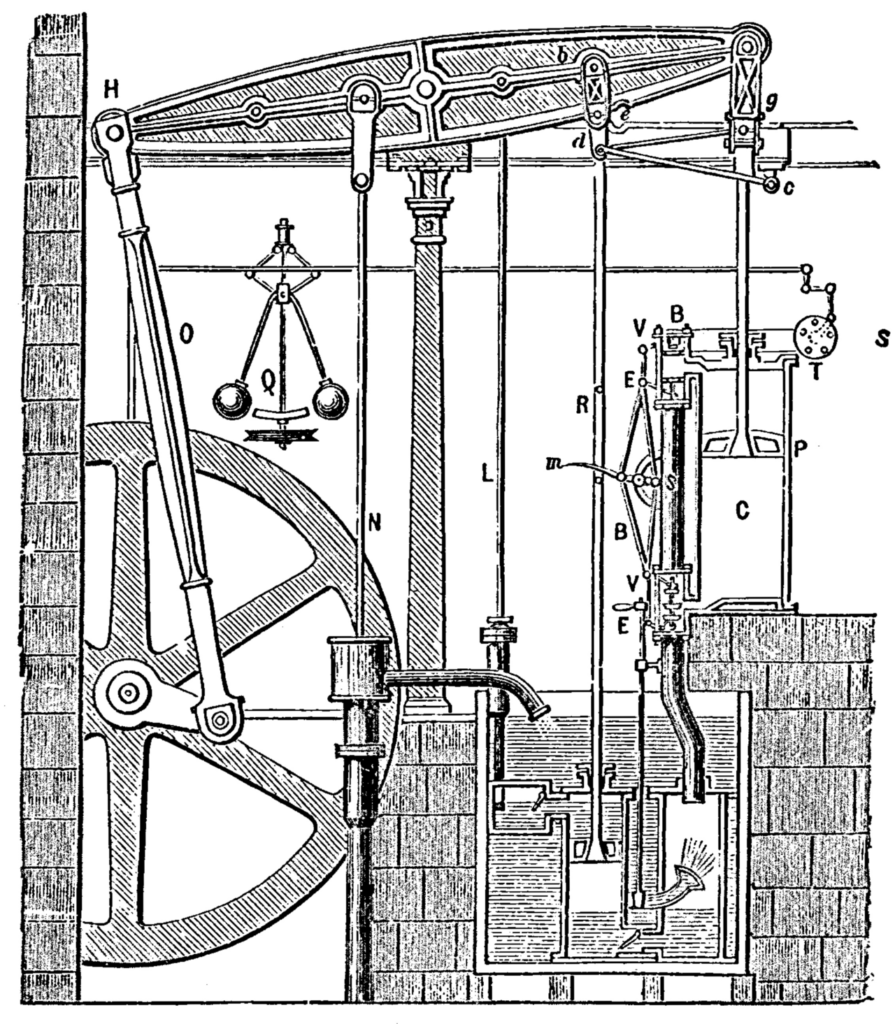
The Industrial Revolution is usually dated from around 1760 to 1840, and it began in Great Britain thanks to a specific combination of factors: large coal reserves, access to investment capital, and a machine capable of efficiently turning heat into motion. Scottish engineer James Watt didn’t invent the steam engine from scratch — starting in 1769, he improved on an earlier design by Thomas Newcomen that was already used to pump water out of mines. Watt’s version drastically cut wasted energy, making the steam engine practical enough to power far more than pumps, and it became the technological backbone of nearly the entire period that followed.
2. The textile industry was the first to be completely transformed
Before the Industrial Revolution, cloth production happened mostly at home, in a system known as the “domestic” or “cottage” industry, with entire families spinning and weaving by hand. That changed with inventions like the spinning jenny, created by James Hargreaves in 1764, which let a single worker spin several threads at once, and the power loom patented by Edmund Cartwright in 1785, which sped up weaving even further. These machines were too large and expensive to fit in an ordinary home, which pushed production into factories — a model that quickly spread to other industries and completely redefined the relationship between workers and their workplace.
3. Railways cut journeys from days to hours
Before railways, traveling between cities depended on horse-drawn carriages, a slow and expensive process. That began to change in 1830, with the opening of the Liverpool and Manchester Railway, generally considered the world’s first intercity railway designed from the start to carry both passengers and freight at scale. The locomotive used was based on the “Rocket,” designed by George Stephenson, winner of the 1829 Rainhill Trials for reaching speeds that stunned contemporaries — around 29 miles per hour (47 km/h), a record for the time. Within a few decades, an extensive rail network connected entire regions of Europe and North America, shrinking trips that once took days down to a matter of hours.
4. Cities grew so fast that infrastructure couldn’t keep up
The concentration of factories in certain regions drew a mass migration from the countryside into cities in search of wage labor. Manchester, for example, saw its population jump from just over 10,000 residents in the early 18th century to more than 300,000 by the mid-19th century — growth so fast that housing, sanitation, and waste collection simply couldn’t keep pace. The result was extremely dense working-class neighborhoods with serious air pollution problems — the famous thick smog of smoke and soot, later nicknamed “pea-soupers” in London — along with recurring outbreaks of diseases like cholera, tied directly to the lack of treated drinking water.
5. Children worked in factories, until laws began limiting it
In the early decades of industrialization, it was common for children as young as 6 or 7 to work in textile mills and coal mines, often for 12 hours or more a day, precisely because they were small enough to move between tight machinery or narrow tunnels. Public pressure from reports on these working conditions pushed the British Parliament to pass a series of factory laws throughout the 19th century — the Factory Act of 1833, for instance, banned children under 9 from working in textile mills and limited working hours for older children. These laws, incomplete and hard to enforce at first, were the first step in a longer process that, decades later, would lead to the modern labor and union movements.
6. The revolution didn’t stop in England — and it’s still ongoing
Starting in the mid-19th century, Britain’s industrial model spread to Belgium, France, the United States, and later Germany and Meiji-era Japan, with each country adapting the technology at its own pace. Historians often call the period that followed, roughly between 1870 and 1914, the Second Industrial Revolution, marked by advances such as the Bessemer process for large-scale steel production (1856) and the electrification of factories and cities. The direct legacy of those decades is still visible in how the world produces energy, organizes supply chains, and faces challenges like climate change, whose roots trace back to exactly the kind of intensive coal burning that began in that period. Anyone who enjoys this kind of history fact might also like our piece on facts about accidental inventions.
Recommended products
Illustrated Book on the Industrial Revolution — a solid way to dig deeper into this period with imagery and a detailed timeline.
Steam Engine Model Kit — a hands-on way to see, in miniature, the kind of mechanism that kicked off the whole era.
Disclosure: this is our tracked affiliate link.