
As an Amazon Associate, we earn from qualifying purchases. This post may contain affiliate links.
By Luis Gustavo. See how we research and review our content.
Few figures in history carry as much myth around them as the medieval knight: the popular image blends shining armor, duels for honor, and heroic charges, but the reality documented by historians is far more complex — and, in many ways, more interesting than the movie cliché. From the real weight of a full suit of armor to the decades-long process behind training a knight, these facts about medieval knights show how this institution that dominated European battlefields for centuries actually worked.
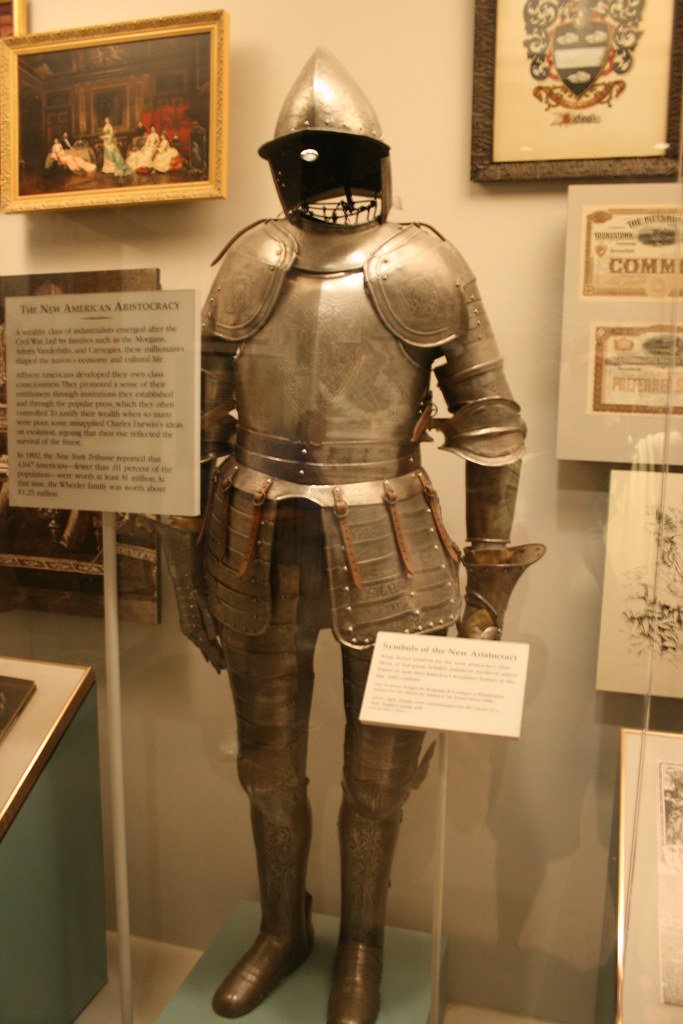
1. Full armor weighed 44 to 66 pounds, but the weight was spread across the body
Contrary to what many movies suggest, a full plate armor suit from the late Middle Ages didn’t leave a knight immobilized — it weighed between 44 and 66 pounds, but that weight was distributed fairly evenly across the whole body, not stacked on the shoulders like a backpack. Historians who ran trials with original armor and faithful replicas showed that trained knights could run, climb stairs, and even perform acrobatics while wearing it, quite different from the image of a man locked in metal who needs a crane to mount a horse — a myth that isn’t even medieval in origin, but a later exaggeration.
2. Becoming a knight took 10 to 14 years of training
The path to knighthood typically started around age 7, when a boy from a noble family was sent as a page to another lord’s household to learn etiquette, basic horsemanship, and the first fundamentals of combat. Around age 14, he became a squire, serving a knight directly in battles and tournaments while learning to handle a sword, lance, and shield under real conditions. Only around age 21, after proving both skill and character, was the squire formally knighted in a ceremony — a process lasting more than a decade, which explains why not every nobleman actually became a knight.
3. War horses were specifically trained not to flee the chaos of battle
The destrier, the most prized war horse of the Middle Ages, went through specific training to tolerate the clang of metal, the smell of blood, and the chaotic movement of battle without panicking — an ordinary horse would simply bolt from the scene. These horses cost the equivalent of a small fortune, often more than the knight’s own armor, and were trained to strike with their front hooves on command, effectively turning the animal itself into an offensive weapon during close combat.
4. Medieval tournaments were about as dangerous as real battles
Tournaments, often portrayed as a controlled sporting spectacle, regularly caused real deaths — historians estimate dozens of knights died in French and English tournaments alone throughout the 12th and 13th centuries, before stricter safety rules began being adopted. King Henry II of France, for instance, died in 1559 after being struck in the eye by a lance splinter during a tournament, an episode that helped accelerate the decline of the practice among European nobility in the following decades.
5. Chivalry was more of an ideal than a rule strictly followed
The idea of chivalry as a rigid code of honor, protection of the weak, and absolute loyalty was, in practice, more of a literary ideal promoted by chivalric romances and the Church than a behavior universally followed on real battlefields. Historical records show knights looting villages, executing prisoners, and breaking truces when convenient — the very concept of chivalry evolved over the centuries precisely as an attempt to discipline a social group that, without such a code, tended to act quite brutally in wartime.
6. Keeping knightly status cost more than the armor itself
Beyond the upfront cost of armor, a war horse, and weapons, a knight had to support squires, backup horses, and ongoing equipment upkeep — a recurring cost that only landed nobility (or a lord’s direct backing) could realistically afford. This financial burden is one of the reasons knighthood, though granted by merit in theory, remained concentrated in practice among families that already had resources, creating a real economic barrier behind the ideal that any talented squire could rise through the ranks.
What a knight’s real military role looked like in battle
On the actual battlefield, a knight functioned as a heavy shock unit, used to break enemy infantry lines through coordinated charges — not as a lone warrior dueling one-on-one, as romances suggest. Well-documented tactics, like those used at Hastings (1066) or Agincourt (1415), show knights operating in formation, coordinated with archers and infantry, and that heavy cavalry’s effectiveness depended heavily on terrain: at Agincourt, muddy ground neutralized much of the French cavalry’s advantage against English longbowmen, one of the reasons military historians cite for the numerically superior force’s surprising defeat.
Why the age of the knight came to an end
The decline of knights as the dominant military force didn’t happen overnight — it was driven by a combination of factors across the 14th and 15th centuries: the English longbow proved capable of piercing armor at a distance, early firearms began making plate armor obsolete as protection, and professional armies funded by centralized states started replacing mounted nobility as the main fighting force. By around the 16th century, the medieval knight as a practical military force had largely disappeared, surviving afterward more as an honorary title than as an active combat category.
If you enjoy ancient combat history, you might also like our facts about Roman gladiators, another group of warriors whose historical reality looks quite different from the popular myth.
To keep exploring this subject, take a look at little-known facts about egyptian mummies.
For anyone into medieval history
Decorative Medieval Wall Sword Replica — a decorative piece inspired by medieval knightly swords, for anyone who wants a themed item at home.
Medieval Knight in Full Armor Decorative Statue — a solid gift idea for anyone who’s into medieval history.
Disclosure: these are our tracked Amazon affiliate links.
Which of these medieval knight facts surprised you the most? Share it with someone else who enjoys separating the myth from the historical record.