
As an Amazon Associate, we earn from qualifying purchases. This post may contain affiliate links.
By Luis Gustavo. See how we research and review our content.
Few historical peoples have been as distorted by pop culture as the Vikings. Between horned helmets that never existed and the image of raiders interested only in plunder, these facts about Vikings reveal a far more complex — and far more interesting — civilization than TV dramas let on.
1. Vikings were, above all, long-distance traders
The image of the Viking as a pure warrior hides the fact that most of the Norse economy relied on trade routes linking Scandinavia to Baghdad and Constantinople, following the rivers of what is now Russia and Ukraine. Archaeologists have found thousands of Arab silver coins, called dirhams, on Swedish islands like Gotland — some dating back to the 9th century, proof that these exchange networks moved silver, furs, amber, and enslaved people across thousands of kilometers, long before any modern concept of international trade.
2. Viking ships reached America 500 years before Columbus
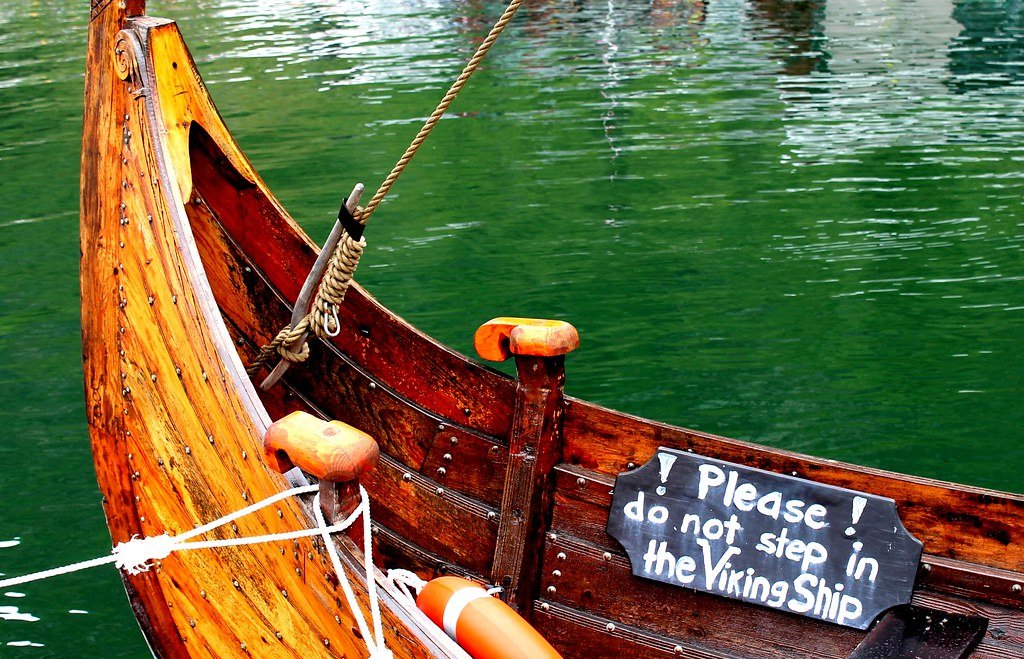
The archaeological site of L’Anse aux Meadows, in present-day Newfoundland, Canada, contains wooden structures and iron rivets dated to around 1000 AD — solid evidence of a temporary Norse settlement in North America. This was possible thanks to the design of the longship, with its flexible hull and shallow draft, capable of sailing both open ocean and shallow rivers, a level of naval engineering Europe wouldn’t match again for centuries.
3. Viking women had unusually strong legal rights for their era
Icelandic sagas and legal records show that women in Viking society could own land, run the farm in a husband’s absence, and even request divorce if a spouse failed basic obligations like financial support. A famous archaeological find, grave Bj581 in Birka, Sweden, contained a female skeleton buried with a full set of weapons and a strategy board game — evidence, still debated among historians, that at least some women also held military roles.
4. The horned helmet is a 19th-century invention
No Viking helmet ever found has horns — the only nearly complete Viking helmet discovered, the Gjermundbu helmet from Norway, is a simple iron piece with no ornamentation of that kind. The popular image was born from opera costumes designed by Carl Emil Doepler for Richard Wagner’s productions in the late 1800s, which needed a dramatic stage look — and that aesthetic stuck in popular culture ever since.
5. Vikings ran a near-democratic assembly system
Long before any modern parliament, Norse communities gathered in assemblies called “things,” where free men debated laws, settled disputes, and chose local leaders. The most famous example is the Althing, founded in Iceland in 930 AD and considered by many historians the oldest continuously running parliament in the world — quite a contrast with the purely violent image movies tend to sell.
Vikings were also settlers, not just raiders
Beyond the raiding expeditions that shaped their popular image, Norse groups organized colonization efforts that changed the map of the North Atlantic. Iceland was settled starting around 874 AD, and Greenland received its first permanent Norse settlements around 985 AD, led by Erik the Red — exiled from Iceland for manslaughter, who gave the icy territory the name “Greenland” as a marketing move to attract new settlers. These colonies lasted for centuries: the Norse settlement in Greenland only disappeared around the 15th century, likely due to a combination of climate change, trade isolation, and conflicts with local Inuit populations.
6. High-quality Viking swords were signed — and counterfeited
Many of the finest swords found in Viking graves carry the inscription “ULFBERHT” on the blade, a kind of quality mark tied to a forging method that produced steel with an unusually high and pure carbon content for the era, likely originating in workshops along the Rhine, in what is now Germany. These blades were lighter, more flexible, and broke far less often than typical steel of the period, making them extremely valuable and sought after across Scandinavia. Modern metallurgical analysis, however, has identified several “ULFBERHT” swords made with far inferior steel — evidence that counterfeiters of the time tried to copy the mark without mastering the technique, one of the earliest documented cases of trademark counterfeiting in history.
Taken together, these details paint a picture far removed from the raiders-and-horns stereotype: a network of traders, sailors, farmers, and lawmakers whose reach stretched from North America to the Middle East centuries before most of medieval Europe had comparable maritime range.
If you enjoy this kind of historical deep dive, you might also like our piece on facts about Roman gladiators.
If this topic interests you, it’s worth checking out our piece on pirate facts.
Want to explore Viking culture further?
Vikings: The Complete History Book — pulls together recent archaeological research on Norse navigation, trade, and society.
Viking Drinking Horn Replica with Stand — a decorative piece inspired by Norse feasting traditions, great for history collectors.
Disclosure: these are our tracked Amazon affiliate links.
Enjoyed these facts? Share them with someone who only knew Vikings from the Netflix series.