
As an Amazon Associate, we earn from qualifying purchases. This post may contain affiliate links.
By Luis Gustavo. See how we research and review our content.
Turning on the air conditioner on a hot day and getting hit with a musty smell in the first few minutes is a far more common complaint than people realize, especially in units that sit off for days or weeks between uses. That smell isn’t just unpleasant — it’s usually a direct sign that there’s an environment inside the unit itself, right next to the air circulating through the room, where fungi and bacteria are actively growing. Understanding where that odor actually comes from helps fix the real cause instead of just masking it with an air freshener.
Why air conditioners start smelling musty
The heart of the problem is the evaporator coil, the internal part of the unit that gets cold during operation to cool the air. That process generates constant condensation, and the combination of moisture, a dark environment, and limited airflow makes the coil a near-perfect spot for mold and bacteria to grow, gradually building a thin biofilm layer across the metal over time. The drain pan, which collects condensed water before it drains outside, also holds stagnant moisture whenever the drain line is partially clogged with dirt, dust, or small organic debris, creating a second spot where fungi can thrive. Dirty air filters make things worse, since they trap dust and particles that feed mold growth and reduce airflow inside the unit, keeping moisture trapped for longer. This process tends to become more noticeable after long stretches with the unit turned off, since the moisture left on the coil simply never got the chance to dry.
Common mistakes that make the smell worse
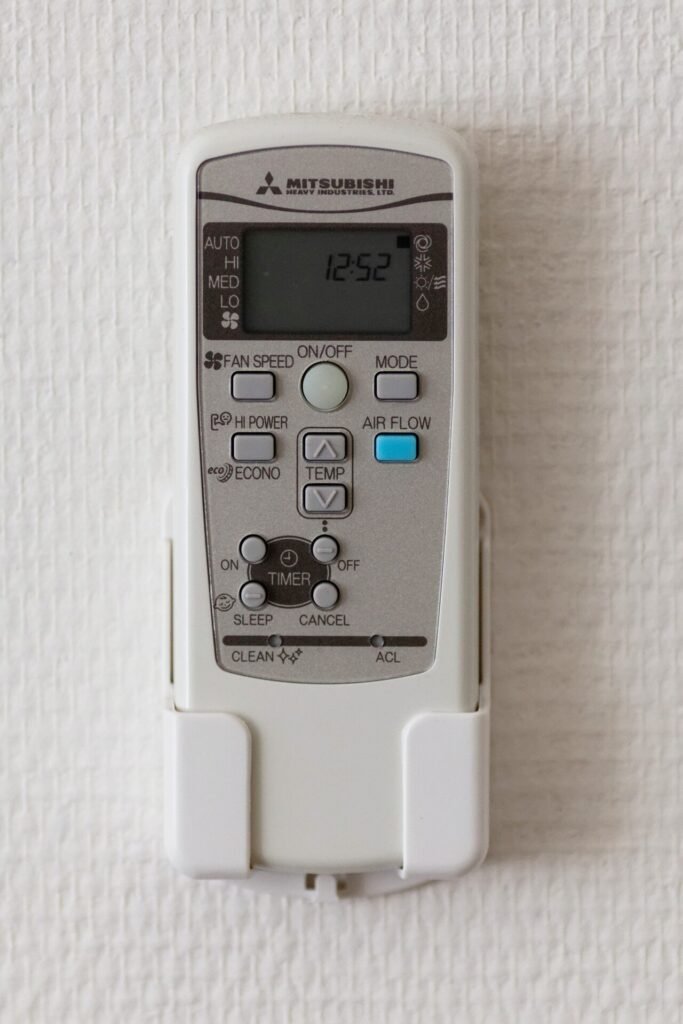
One of the most frequent mistakes is turning the unit off directly from the remote as soon as the room cools down, without letting fan-only mode run for a few minutes first — that leaves the coil wet and sealed inside the unit until the next use, exactly the condition mold needs to spread. Ignoring the air filter for months at a time, assuming the smell will just go away on its own, is also common, but in practice it only lets more dust and dirt build up, feeding the problem instead of solving it. Many people also never schedule a professional cleaning of the coil and internal fan, a service that removes the biofilm a cloth or a surface-level spray simply can’t reach. Finally, leaving a clogged drain line unchecked, even once water starts visibly dripping from the unit, tends to get ignored until the smell becomes too strong to brush off.
The effects of living with a musty air conditioner
Beyond the obvious nuisance of the smell, which tends to seep into curtains, bedding, and upholstery in the room where the unit sits, the air circulating through a moldy coil carries spores and particles that can contribute to respiratory irritation and worsen existing allergy symptoms in some people — without this necessarily meaning a respiratory diagnosis, but it’s a factor worth eliminating as a precaution. Cooling efficiency also tends to drop gradually, since biofilm and dirt buildup on the coil make heat exchange harder, forcing the compressor to work more to reach the same temperature and driving up the unit’s energy use. In more advanced cases, the smell can become persistent enough to be noticeable even with the air conditioner off, simply from the room’s air recirculating. This kind of moisture problem is closely related to what we’ve already covered in our piece on mold and humidity, since the conditions that favor mold inside the unit are the same ones that favor mold on walls and in closets.
How to get rid of the smell and keep your AC clean
After running the unit in cooling mode, switching to fan-only for about 5 to 10 minutes before turning it off completely helps dry out the coil, cutting down significantly on the stagnant moisture that feeds mold. Cleaning or replacing the air filter every 2 to 4 weeks during frequent use — or at least once a month — prevents the dust buildup that feeds fungi and keeps airflow inside the unit where it should be. Using a dedicated AC coil cleaning foam directly on the evaporator coil, following the product’s instructions, helps remove accumulated biofilm without having to take the whole unit apart, although a full professional cleaning every 6 to 12 months is still recommended to reach internal parts a spray alone can’t fix. Checking the drain line periodically, making sure condensed water drains freely, also keeps the internal pan from turning into a standing pool of moisture. Anyone who cares about keeping their home’s air healthy might also be interested in our piece on the best air purifier, another tool that helps deal with particles and odors in enclosed rooms.
Recommended products
AC Evaporator Coil Cleaner Foam — removes biofilm buildup from the coil without having to take the unit apart, right at home.
Replacement Air Conditioner Filters — keeps dust and debris from feeding mold growth and restricting airflow inside the unit.
Disclosure: this is our tracked affiliate link.
Has your air conditioner ever hit you with that musty smell the moment you turn it on? Save this article and share it with anyone else who deals with the same thing.